
She Made Me Tea
I lived with a girl named Brianna for eight months before I realized she had systematically stolen my entire identity.
We met on a local roommate-finder group. She seemed completely normal—quiet, a bit introverted, worked a standard administrative desk job at a medical supply company, and spent most of her free time in her room watching reality TV. She paid her half of the rent exactly on time via bank transfer every single month. We weren't best friends, but we had a perfectly pleasant, respectful dynamic. Or so I thought.
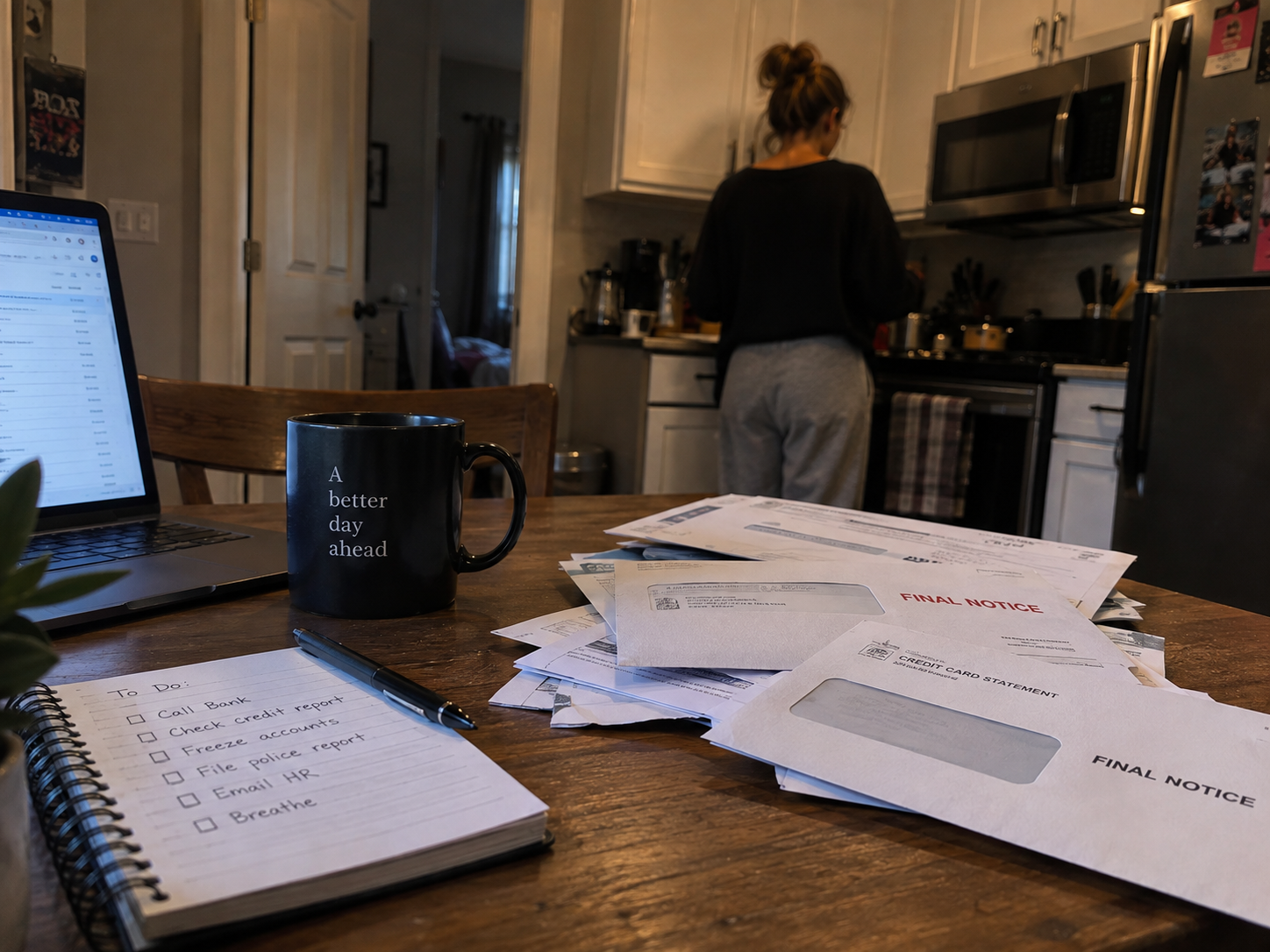
The first crack appeared when I went to apply for a standard credit card upgrade at my bank. The representative looked at his screen, frowned, and told me my application was flagged because of a massive drop in my credit score. I was confused. I only had one credit card, my student loans were deferred, and I paid my monthly balance in full. When I pulled my actual credit report that evening, my stomach dropped. Someone had opened two high-limit store credit cards and taken out a $12,000 personal loan for a used car under my name.
The address tied to all of these accounts was our current apartment. My initial reaction wasn't suspicion toward Brianna. I assumed I’d been hacked online or fell victim to a data breach. I went out into the living room, completely panicked, and told her what happened. She looked shocked, gave me a hug, and told me her cousin had gone through something similar. She even made me a cup of tea while I sat at the kitchen table crying.
But over the next week, the math stopped adding up. In order to open a personal loan in person at a credit union, you need physical documents. I went to my desk drawer where I kept my passport and social security card. They were exactly where I left them. But then I noticed a tiny detail: the cardboard folder they were in was slightly bent at the corner, and my birth certificate was tucked behind my passport instead of in front of it where I always kept it.
I started checking the mail delivery times. Our building had a cluster of locked mailboxes in the lobby. I worked from home on Thursdays, and I noticed that on three separate occasions, Brianna had gone down to "check the mail" before the mail carrier had even arrived, lingering in the lobby for twenty minutes.
The breaking point came when I contacted the fraud departments for the creditors. Under federal identity theft laws, if you file a formal dispute, you can request the original copies of the applications. It took two weeks, but two of the credit card companies emailed me PDF copies of the signed, in-branch paperwork.
I opened the attachments at my desk. The handwriting wasn't mine. The signature was a messy scribble trying to imitate my last name. But the real giveaway was the email address listed for notifications. It wasn't my email, but it used a specific format—firstinitial.lastname.96@gmail.com—a secondary account Brianna used for online shopping.
I didn't confront her. I was terrified of what she would do if she knew I knew, considering she slept fifty feet down the hall from me. Instead, I waited until she left for her Friday shift at work.
The moment her car pulled out of the driveway, I called my brother. He drove over with a pickup truck, and we spent four frantic hours packing up my entire bedroom. While clearing out my desk, I looked under the bed to make sure I hadn't dropped any shoes. Tucked all the way against the baseboard was a small, plastic grocery bag.
I pulled it out. Inside were dozens of opened pieces of mail addressed to me—credit card statements, late payment notices, and loan terms—that she had intercepting from the lobby mailbox before I could ever see them. There was also a notebook. In it, she had meticulously written down my social security number, my mother's maiden name, my childhood pet's name, and a timeline of my work schedule so she knew exactly when I wouldn't be around.
I took the bag, went straight to the local police precinct, and filed a formal identity theft report with the Federal Trade Commission affidavit attached.
The resolution wasn't a dramatic showdown. The police handles these things incredibly slowly. They went to her workplace a week later to question her. Because the credit union had grainy security camera footage of her standing at the counter signing the loan documents under my name, she didn't really have a defense.
She ended up taking a plea deal for felony identity fraud and received probation and a restitution order to pay back the creditors. It took me almost eight months of continuous phone calls, certified letters, and bureaucratic nightmares to finally get the fraudulent accounts wiped from my credit history.
The part that actually messes with my head to this day isn't the financial damage.
It's the memory of that night I sat at my kitchen table, completely heartbroken and crying about my credit score, while she stood at the stove making me tea, looking me dead in the eye, and comforting me about a crime she had committed three days prior.
The Life We Almost Had
People always say, “If two people are meant to be together, they'll find their way back to each other.”
I used to believe that.
Now I'm not so sure.
I met Emma when I was twenty-six.
She was sitting alone in a coffee shop reading a book I'd been pretending to read for months.
I walked over and asked, “So... how does it end?”
She laughed.
“You haven't actually read it, have you?”
I admitted I hadn't.
She closed the book.
“Sit down.”
We talked for four hours. Neither of us noticed the coffee shop had closed until an employee asked us to leave.
For the next three years, we built a life together.
It wasn't perfect.
She squeezed the toothpaste from the middle. I left cabinet doors open. She loved old bookstores. I loved baseball. She cried during every movie.
I never did.
Somehow, it worked.
Then life happened.
I was offered a promotion in Chicago.
Emma had been accepted into a graduate program in Boston.
Neither of us wanted the other to give up a dream.
So we made what seemed like the mature decision.
“We'll do long distance for two years.”
At first, we were fine.
Video calls every night. Weekend flights when we could afford them. Messages throughout the day.
Then work got busier.
Her classes got harder.
Calls became shorter.
Sometimes we'd go two days without really talking.
Not because we stopped loving each other.
Life simply began taking up all the space love used to occupy.
One Friday night, Emma called.
“I think we're trying to remember what this feels like instead of actually feeling it.”
I knew exactly what she meant.
There was no betrayal. No other person. No screaming.
Just two people who loved each other admitting that love wasn't surviving the distance.
“I hope you're happy,” she said.
“I hope you are too.”
And that was it.
Over the next decade, life moved forward.
I got married.
Emma got married.
We both had children.
Occasionally something reminded me of her.
A bookstore. A song. Hazelnut coffee.
Then life continued.
Eleven years later, I was walking through the Denver airport during a layover when someone said my name.
I turned around.
Emma.
Older. A few gray hairs.
The same smile.
For a moment, neither of us moved.
Then we laughed because neither of us knew what else to do.
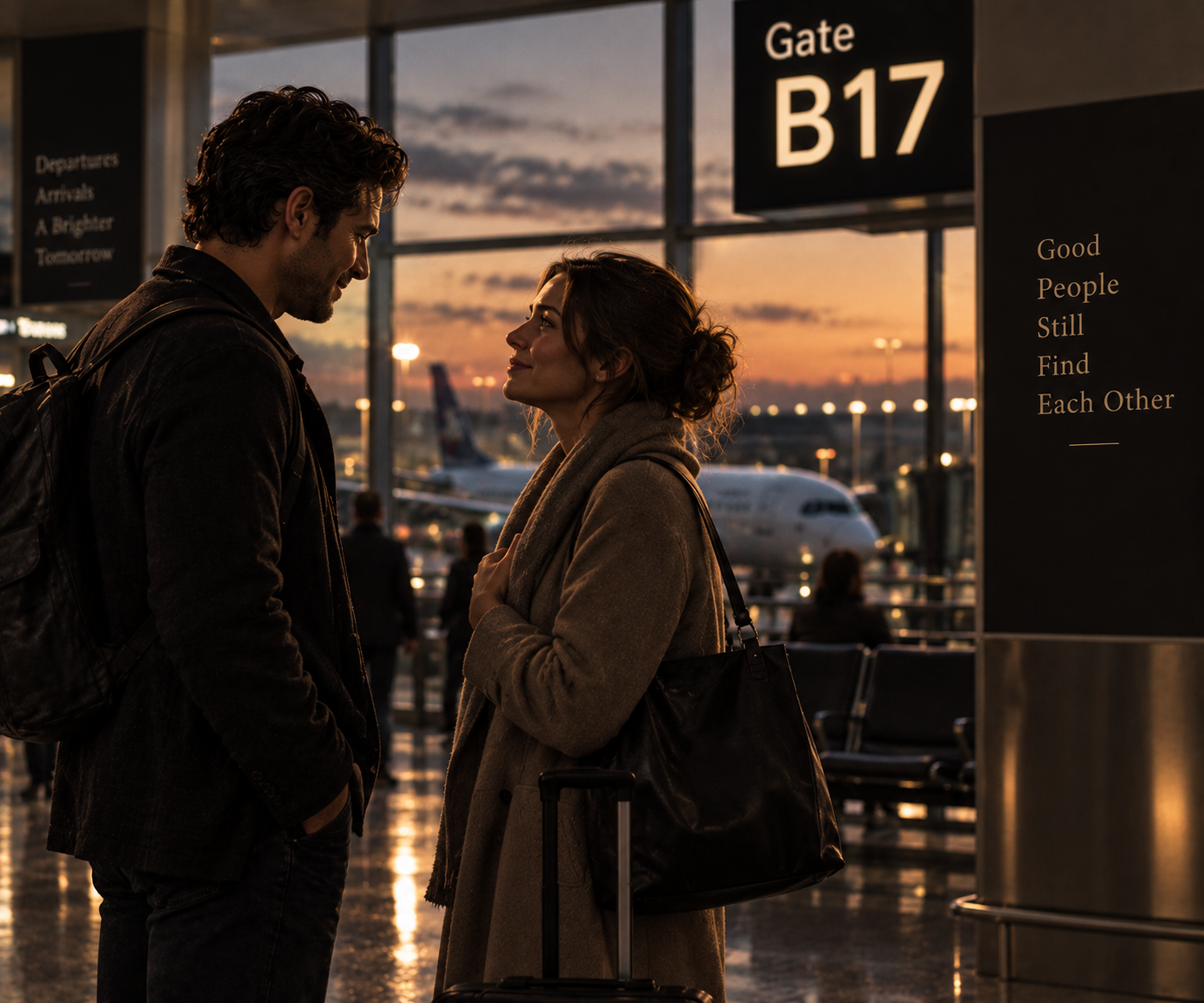
Both our flights were delayed, so we sat near Gate B17 and caught up on eleven years.
We talked about our children, our jobs, our parents getting older.
She showed me pictures of her son.
I showed her my daughter.
Then she smiled.
“You still leave cabinet doors open?”
“My wife asks me that every week.”
She rolled her eyes.
“I knew you'd never change.”
For a moment, it felt like no time had passed.
Then her flight was called.
She stood.
“I should go.”
“Yeah.”
We hugged.
The kind of hug you give someone who was once your entire world but is now a chapter in your life instead of the whole book.
She picked up her bag, then stopped.
“Can I ask you something?”
I nodded.
“Do you think we made the right decision?”
I thought about it.
“No.”
She looked surprised.
“I think we made the only decision we knew how to make.”
Her eyes filled with tears.
“So we weren't wrong?”
“No.”
“We were just young.”
She smiled.
“So were we.”
Then she walked toward her gate.
I watched until she disappeared into the crowd.
I didn't ask for her number.
I didn't look for her online.
We both had lives waiting for us.
And somewhere between meeting Emma at twenty-six and seeing her again eleven years later, I finally understood something.
Not every great love is supposed to become a marriage.
Emma taught me how to listen. How to apologize. How to love someone without trying to change them.
My wife benefits from lessons another woman taught me.
And somewhere, I hope Emma's husband benefits from lessons I taught her too.
If I could go back to that coffee shop knowing exactly how our story would end, would I still ask her about that book?
Without hesitation.
Some people are meant to stay in your life.
Others are meant to stay in your heart.
"The mistake is believing those are always the same place."
The Bowl I Couldn't Break
I still remember the exact moment I realized I wasn't in love anymore; I was just terrified.
It didn't start with screaming or broken dishes. If it had, I would have walked away on week two. When I first met Marcus in 2024, he was the most attentive, charming guy I had ever known. He used to leave little notes on my car windshield before work. He wanted to know everything about me. I thought it was romance. Looking back, it was data collection.
The shift happened so slowly that I didn't even notice the walls closing in until the door was locked. First, it was the comments about my friends. "Sarah doesn't really respect your time, you know?" or "Your brother always seems to look down on me." He said it with so much concern for my well-being that I believed him. Slowly, I stopped texting them. It was just easier than dealing with his quiet, freezing moods afterward.
Then came the financial control. He convinced me that we should save for a house together, so I let him handle our shared budget. Within six months, my paycheck went straight into an account I didn't have the login credentials for. If I wanted to buy a €4 coffee or a pack of makeup wipes, I had to text him for permission. If I didn't, he wouldn't yell. He would just do this terrifying thing where he completely ignored me for three days straight, staring right through me in our small apartment like I didn't exist. The silence was louder than any screaming match. It eroded my sanity until I was apologizing on my knees for things I hadn't even done, just to make him look at me again.
By mid-2025, I didn't recognize myself. I was twenty-six, but I felt eighty. I walked on eggshells in my own home, constantly calculating the exact pitch of my voice, the time I arrived home from work, and the clothes I wore to keep him from turning into a stranger.
The turning point was so small, but it saved my life.
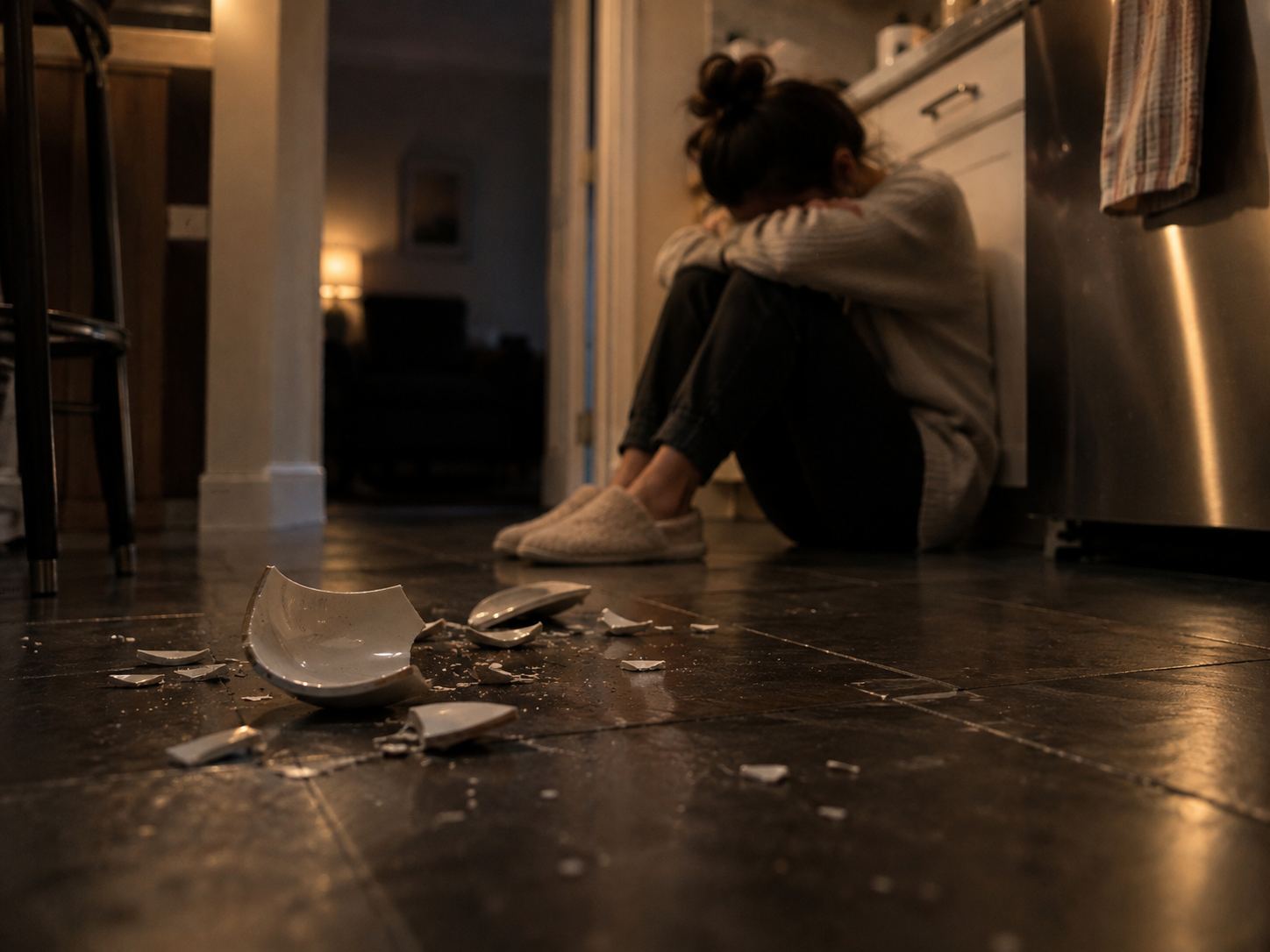
It was a Tuesday night. I was chopping onions for dinner, and I accidentally dropped a ceramic bowl. It shattered on the kitchen tile. It was an accident. But the sound made me freeze. My heart started hammering against my ribs so hard I couldn't breathe. I scrambled to the floor, frantically trying to pick up the sharp shards before he walked through the front door, crying because I knew what the broken bowl would mean—another week of the silent treatment, another week of being told how clumsy, stupid, and useless I was.
As I sat there bleeding from a tiny cut on my thumb, looking at my reflection in the oven door, a sudden wave of clarity hit me like ice water. I wasn't crying because the bowl was broken. I was crying because I was living in a prison I had helped him build. I knew I couldn't just tell him I was leaving.
The one time I had brought up taking a break a few months prior, he had blocked the front door with his body, taken my phone, and told me that if I ever tried to leave him, he would make sure my family found out about things that would ruin them. I knew he was bluffing, but the sheer malice in his eyes told me everything I needed to know. I had to go, but I had to be smart.
It took me three months to plan it. Three months of playing the perfect, submissive girlfriend while quietly reclaiming my life in secret.
*The Secret Account: I went to a bank near my office during my lunch break and opened a completely private checking account. I told my HR department to split my paycheck, sending 90% to our shared account so Marcus wouldn't notice, and 10% to the secret one.
*The Code Word: I finally reached out to Sarah, the friend I had ignored for a year. I called her from a burner app on my laptop at work. I didn't tell her everything because I was too ashamed, but I told her enough. We agreed on a code word: "Pineapple." If I texted her that word, it meant she needed to show up at my apartment with her car trunk empty.
*The Essentials: I slowly began smuggling my life out of the apartment in my work bag. One day it was my birth certificate and passport. The next week, it was a few sentimental pieces of jewelry my grandmother gave me. I left them in a locker at my office.
The day came on a Thursday in October. Marcus was scheduled to be at an out-of-town corporate seminar until 8:00 PM.
My hands were shaking so badly I could barely type, but at 2:00 PM, I sent the text to Sarah: Pineapple.
Thirty minutes later, she pulled up to the curb. She didn't ask questions. She didn't lecture me about why I had stayed so long. She just hugged me, threw my two duffel bags into the back seat, and handed me a cup of hot tea.
Leaving that apartment was the heaviest and lightest feeling in the world. I left my keys on the kitchen counter next to a brief, one-sentence note: "Do not contact me, do not call my family, we are done."
I spent the next two weeks sleeping on Sarah’s living room couch, jumping every time the text notification on my phone went off. Marcus tried everything. He sent dozens of emails ranging from pathetic, weeping apologies to vague, dark threats. But this time, I didn't reply. I blocked his number, deleted my old social media accounts, and went straight to a local legal aid clinic to file for a protective order.
It’s been almost a year now. I have my own tiny, studio apartment. The furniture is mismatched, and the radiator makes a horrific clanking sound every morning, but every square inch of it belongs completely to me.
Sometimes I still catch myself apologizing to empty rooms when I drop something, or feeling a flash of panic when I spend money without asking.
Healing isn't a straight line, and the damage he did runs deep.
But the first time I sat on my floor, eating pizza out of the box at midnight in total, peaceful silence, I realized something incredible: I am not broken.
He tried to dim my light, but he didn't manage to put it out.
It Was Only Eighteen Dollars
I never thought eighteen dollars could make a grown man cry.
At the time, I was thirty-eight years old, married, with two young daughters who believed their dad could fix anything. To them, I was the strongest person in the world. To my wife, I tried to be. But behind closed doors, I was slowly falling apart.
Three months earlier, the company I'd worked for since I was twenty-three closed its doors without warning. One Friday afternoon we were told to pack our desks. By Monday morning, the building was empty. I walked out carrying a cardboard box and a smile I didn't feel because I couldn't bear the thought of calling my wife and telling her that our entire life had just changed.
For the first few weeks I convinced myself I'd find another job quickly. I updated my résumé, sent out applications, and went to interviews that always ended the same way. "We'll let you know." They never did.
Our savings disappeared faster than I ever imagined possible. The mortgage didn't care that I was unemployed. Neither did the electricity company. Or the insurance company. Or the credit card bills that kept arriving every month like little reminders of my failure. I stopped sleeping.
Every morning I woke up before everyone else and sat at the kitchen table with a calculator, trying to perform financial miracles that simply didn't exist.
One afternoon my oldest daughter came running into the room holding a permission slip.
"Dad! Everyone's going on the school field trip!" She was so excited. "It's only eighteen dollars."
Only.
I smiled.
"Of course, sweetheart." She hugged me and ran back upstairs. The moment she disappeared, I opened our checking account. The balance was $14.63. I checked it three more times, hoping I'd somehow missed a digit. I hadn't.
For the first time in my life, I realized I couldn't afford eighteen dollars. I sat there staring at the screen for almost an hour. I wasn't thinking about the money anymore. I was thinking about what kind of father couldn't send his daughter on a school trip because he was three dollars and thirty-seven cents short.
That night I barely spoke during dinner. My wife noticed. She always noticed. After the girls went to bed, she quietly slid an envelope across the table.
Inside was cash. More cash than I'd seen in weeks.
"Where did this come from?" I asked. She looked down at her hands before answering. "I sold my wedding ring." I laughed because I genuinely thought she was joking.
She wasn't. She had gone to a jeweler that afternoon while I was out dropping off résumés.
"I'll buy you another one," I said. She reached across the table, held my hand, and smiled.
"I didn't marry the ring."
That sentence broke something inside me. Not because she sold it. Because she had done it without making me feel like I'd failed. The next morning I paid the eighteen dollars. My daughter came home that afternoon talking nonstop about feeding goats, riding the bus with her best friend, and how it was "the best day ever."
She had no idea what it had cost us. Six months later, I finally found another job. It didn't pay as much, but it was enough. A year after that, I took my wife back to the same jewelry store. I asked the owner if he remembered buying her ring.
He nodded.
"I'd like to buy it back." He smiled and disappeared into the back room. A few minutes later he returned holding a small velvet box. He had kept it.
I proposed to her all over again in our living room while our daughters laughed because they thought their parents were being silly. She still wears that ring today.
But whenever someone compliments it, I don't think about diamonds. I think about sacrifice. I think about love. I think about the day my wife quietly carried a burden that she never should have had to carry alone.
Losing my job wasn't the hardest part of that year. The hardest part was believing that my worth as a husband and a father was measured by the balance in my bank account.
It isn't.
If you're reading this while worrying about money, I hope you remember something I wish someone had told me years ago:
Your family will remember how you loved them far longer than they'll remember how much money you made.

Some Dreams Arrive Before We Are Ready
When I was ten years old, I heard a Ricky Martin song that made me obsessed with a place I had never seen.
I was one of those kids who felt music physically. A song could change the temperature of a room for me. It could make an ordinary afternoon feel like something was about to happen.
Then I heard "Livin’ la Vida Loca."
There was a part about Rio de Janeiro, dancing in the rain, and I became completely fixated on it.
I ran to my mom and asked her where Rio was.
She found it on a map and showed me. I remember putting my finger on that tiny spot in Brazil and staring at it.
One day, I thought, "I’m going to dance at Carnival in Rio de Janeiro."
Then I went back to being ten.
I forgot about it.
Thirteen years later, I was 23. I had just finished school and gotten my esthetician license. I was bartending while figuring out my next move. My plan was Los Angeles. I wanted to become a special effects makeup artist and work in Hollywood.
LA was supposed to be the beginning of my real life.
Then one night at the bar, a man asked me out.
He was Brazilian.
From Rio de Janeiro.
The childhood memory didn't come rushing back. There was no sign from the universe, no dramatic moment where I connected the dots.
I didn't even think about the song.
We dated for a few months. And somehow, within six months of meeting him, I was emptying my apartment.
I left half my belongings beside the dumpster.
I left my job. My friends. My family. My plans for Los Angeles. Everything I had spent years believing I was supposed to do.
I got on a plane to Brazil.
Even now, I have trouble explaining why.
It wasn't entirely love. There was something else pulling me there. Something almost irrational. My body seemed to make the decision before my brain had time to argue with it.
I landed in São Paulo, and we drove seven hours to Rio.
I had never really traveled before. Now I had moved to another country.
And strangely, I wasn't terrified.
I felt like a little girl.
Everything was unfamiliar—the language, the streets, the food, the people—but instead of making me feel small, it made the world feel enormous.
For the first time in a long time, I was proud of myself.
Then February came.
Carnival.
The city changed.
Music seemed to come from everywhere. Streets closed. People poured outside. There were parties on the beaches and dancing in places that normally belonged to traffic. Rio felt like it had decided sleep was unnecessary.
One day, we were out near the beach with everyone else.
At some point, I wandered away from the group.
I don't remember why.
I just remember suddenly being alone in the middle of thousands of people.
Then it started raining.
Not cold rain. Warm summer rain.
I stopped on the boulevard and looked up.
My hair was soaked. My clothes stuck to me. Music was playing somewhere nearby, and people around me kept dancing as though the rain were part of the celebration.
So I started dancing too.
And that's when I remembered.
The map.
My mother's hand showing me Brazil.
My ten-year-old finger pressed against Rio de Janeiro.
The song.
That little girl making a promise to herself that she had absolutely no idea how to keep.
I was standing inside it.
Thirteen years later, on a boulevard in Rio de Janeiro during Carnival, I was dancing in the rain.
I started crying.
Nobody noticed because the rain hid it.
For a few seconds, I felt something I have never been able to properly explain. It wasn't about the man I had followed there. It wasn't about Brazil. It wasn't even really about the song.
It was about me.
Somewhere along the way, without planning it, I had walked directly into a childhood dream.
And instead of making me feel lucky, it made me feel powerful.
Like maybe there were things inside us that knew where we were going long before we did.
The part that hurts is what happened afterward.
I didn't stay inside that feeling.
Slowly, I became afraid.
While I was living in Brazil, I kept thinking about the life I wasn't living in America.
What was happening without me?
Was I falling behind?
Had I ruined my career?
Should I have gone to Los Angeles?
Was everyone else moving forward while I was standing still?
I became so obsessed with the future I thought I was losing that I stopped seeing the life directly in front of me.
I was even offered an opportunity to audition for a modeling contract in Brazil.
I didn't go.
I convinced myself it wouldn't help me back in America.
That decision still bothers me.
Not because I think I would have become some famous model. Maybe nothing would have happened.
I regret it because "I didn't even let life answer the question."
I answered it for myself with fear.
Looking back, I wish I had given Brazil one full year.
One year without worrying about Los Angeles.
One year learning Portuguese properly. Making friends. Understanding the culture. Taking ridiculous opportunities simply because they appeared. Seeing where that strange childhood promise might lead if I stopped trying to control the ending.
I spent so much time worrying that my life was happening somewhere else.
I didn't understand that my life was already happening.
I was standing in it.
Barefoot in the warm rain.
Dancing on a boulevard in Rio de Janeiro.
Exactly where the little girl with her finger on the map said she would be.
The Love I Had Left To Give
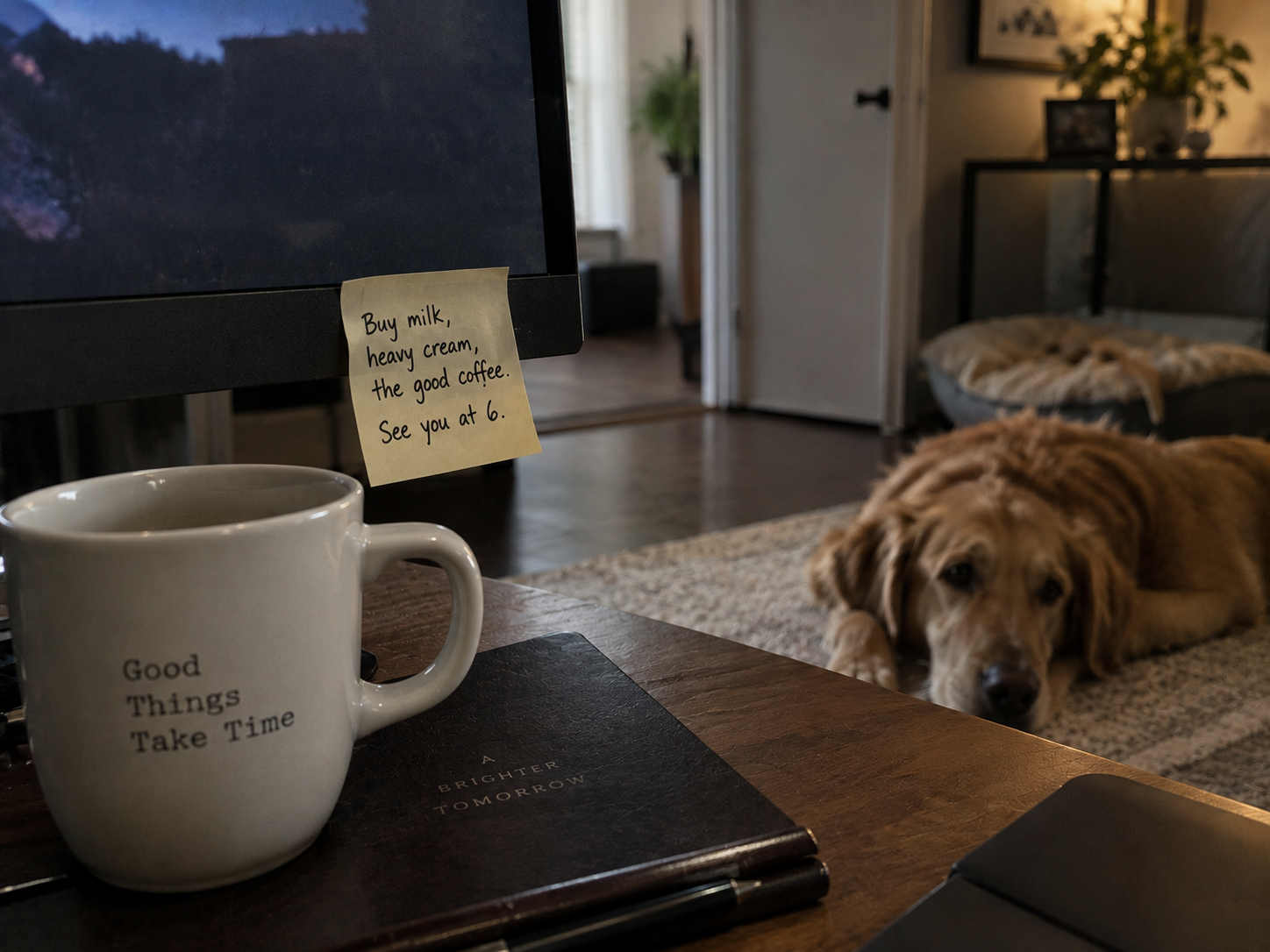
I still have a sticky note on my computer monitor from four years ago. It’s written in black Sharpie, and it just says: “Buy milk, heavy cream, the good coffee. See you at 6.”
The ink is fading, and the edges are curling, but I can’t bring myself to take it down. It was the last thing my wife, Maya, ever wrote to me. She died in a pile-up on I-95 later that afternoon.
For the first two years after the accident, I was a ghost. I went to work, I came home, I stared at the walls. I did the bare minimum to stay alive, but I wasn't actually here. The silence in our house was heavy. It was the kind of quiet that rings in your ears and makes your chest ache.
Every time I saw a couple laughing in a grocery store or holding hands at a coffee shop, a wave of bitter, ugly resentment would wash over me. I hated the world for moving on when mine had completely stopped.
Then, about eighteen months ago, my sister practically forced me to adopt a dog. I didn't want one. I told her I could barely take care of myself, but she showed up at my house anyway with a scruffy, anxious-looking golden retriever mix she'd pulled from a local shelter.
"His name is Barnaby," she told me, shoving the leash into my hand. "He's terrified of everything, and you two deserve each other."
She wasn't wrong.
Barnaby was a mess. The shelter said he'd been found abandoned in an empty lot, and for the first three weeks at my place, he wouldn't let me get within four feet of him. He slept under the dining room table, his whole body shaking whenever the refrigerator kicked on or a car backfired outside.
But having him there forced me into a routine. I had to buy food. I had to open the blinds. I had to walk him. Slowly, without either of us really noticing, the distance between us started to shrink.
It started one night when I was sitting on the living room floor, staring at a blank TV screen, feeling that familiar, crushing wave of grief hitting my chest. I must have let out a shaky sigh because I heard the soft clack of his nails on the hardwood.
I didn't move.
Barnaby crept out from under the table, hesitated, and then gently rested his chin on my knee.
I broke down.
It was the first time I'd cried like that in a year. I buried my face in his fur and just sobbed, and he didn't pull away. He just stood there, anchored, taking the weight of it.
After that night, we were a team.
About two months ago, I finally decided to do something I'd been avoiding for four years: pack up Maya's clothes from the master closet. It was the final barrier. Keeping her coats hanging there made it feel like she was just away on a long trip, and I knew hiding from it was keeping me stuck.
I spent a Saturday morning folding her sweaters into cardboard boxes. Each one smelled faintly of her lavender detergent, and every fold felt like ripping open an old wound. By noon, I was emotionally exhausted. I sat down on the closet floor, surrounded by boxes, overwhelmed by how much I still missed her.
Barnaby walked into the closet, his tail wagging low and slow. He started sniffing around the back corner, behind a stack of old shoeboxes I hadn't moved since we bought the house. He nudged one of the boxes with his nose, knocking it over.
A small, dusty leather sketchbook fell onto the floor.
I picked it up.
I'd never seen it before.
When I opened the cover, I realized it was a journal Maya had kept during the very first year we met, back when we were twenty-three and living in a tiny, cramped studio apartment with no air conditioning.
The pages were filled with her messy handwriting, ticket stubs from movies we'd seen, and little doodles of us cooking dinner or sleeping on our cheap futon. But it was the very last page that broke me completely.
She had written an entry on our first wedding anniversary. The last paragraph read:
"I know we're young, and we think we have forever. But if anything ever happens to me, I need you to promise me something. Don't lock yourself away in the dark. Don't let the love we had turn into something that breaks you. Take all the love I can't give you anymore, and put it somewhere else. Give it to a friend, give it to a stranger, give it to a dog. Just don't hold onto it until it rots inside you. You are too good at loving things to stop now."
I sat on that closet floor for an hour, reading those words over and over until the page was warped from my tears.
It felt like she had reached across four years of silence just to pull me out of the dirt.
She knew me better than I knew myself. She knew exactly what I would do if I lost her, and she'd left me a map to get back.
I looked up, and Barnaby was sitting right in front of me, watching me with those big brown eyes. I reached out, pulled his scruffy body into my lap, and hugged him tight.
For the first time since the accident, the tightness in my chest didn't feel like panic or despair.
It felt like a release.
I'm still sad. I miss her every single day, and I don't think that ever really goes away. But I'm not a ghost anymore.
The sticky note is still on my monitor.
But now, when I look at it, it doesn't feel like a reminder of a life that ended.
It reminds me of how lucky I was to be loved that much.
And how much love I still have left to give.
The Man Who Paid For My Groceries
The most valuable thing a stranger ever gave me cost less than a hundred dollars.
Three years ago, my life quietly unraveled. Within five months, I lost my job, my relationship ended, and I burned through almost all of my savings trying to convince myself I'd find work before the money ran out.
I didn't. I applied everywhere. Sales. Customer service. Warehouses. Retail. Office jobs. Anything.
Most companies never responded. The few interviews I did get always ended the same way. "We'll keep your résumé on file."
Eventually, I signed up to drive for Uber Eats and DoorDash just to keep the lights on. My car wasn't anything special—a 2011 Honda Accord with almost 180,000 miles on it—but it ran, and at that point, that's all that mattered.
Some weeks I made enough to pay my bills. Most weeks I didn't. I became obsessed with numbers.
Every tank of gas. Every grocery receipt. Every dollar mattered.
One Tuesday afternoon, after finishing a lunch rush, I stopped at the grocery store on my way home. Before I walked inside, I opened my banking app.
Available balance: $61.84 That wasn't all the money I had. That was all the money I had. Rent was due in four days.
I walked through the store doing math in my head. Bread. Eggs. Milk. Chicken. Rice. Frozen vegetables.
Nothing went into my cart unless I absolutely needed it. I even picked up a box of cereal before putting it back. It wasn't necessary.
At the checkout, the cashier scanned everything. Total: $68.27 I stared at the screen. I was short. Not by much. But enough. Trying to hide my embarrassment, I asked her to remove the chicken. Then the cereal I'd decided to grab at the last second. Then the coffee.
The people behind me were waiting patiently, but I still felt like every second took an hour.
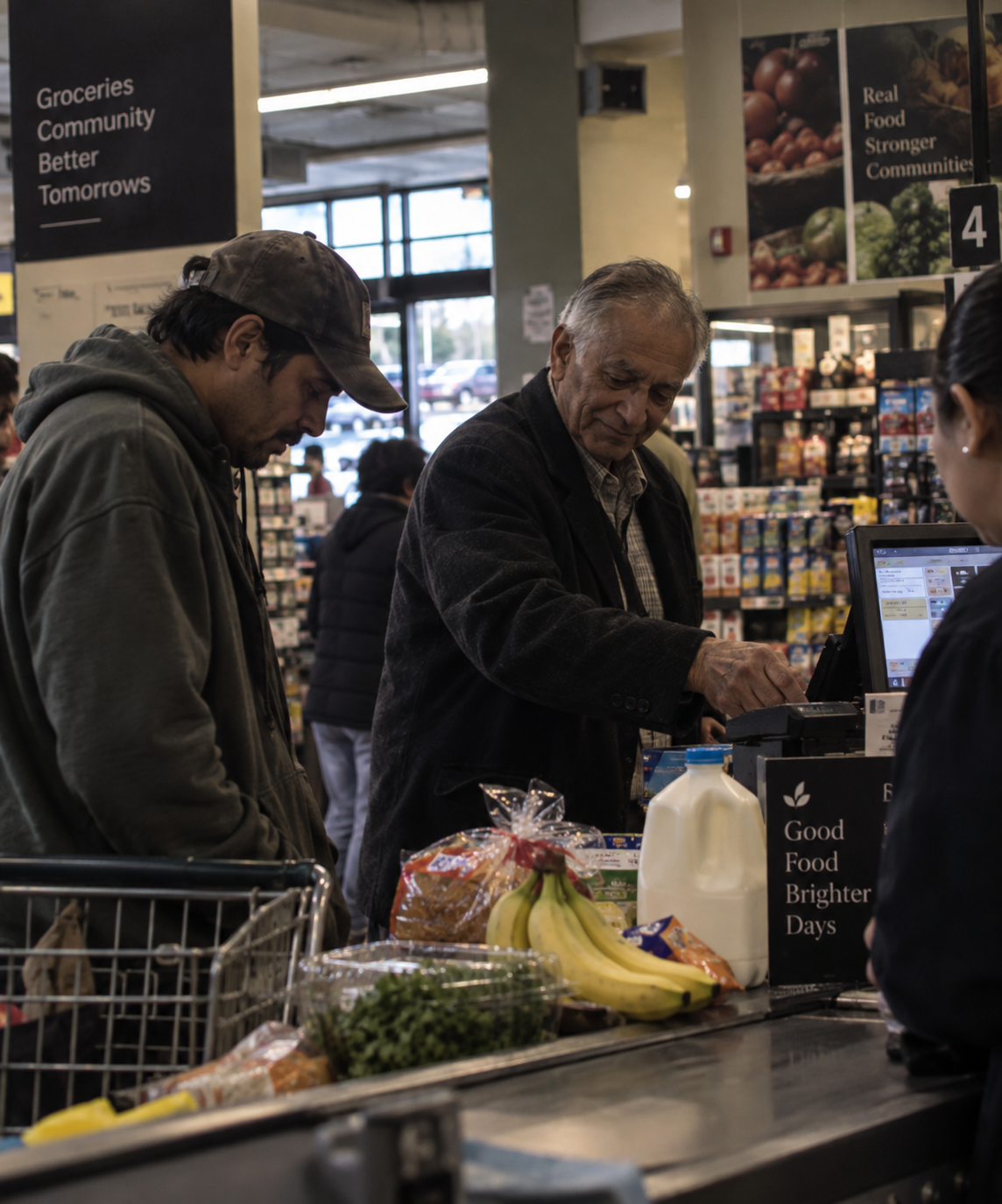
The cashier looked at me and asked softly, "Is this okay now?" Before I could answer, I heard a calm voice behind me. "I'll take care of it."
I turned around. An older man, probably in his seventies, stepped forward and handed the cashier his credit card.
"No, sir," I said immediately. "I appreciate it, but I can't let you do that."
He smiled. "You can." "I really can't."
He looked at me for a moment before saying something I'll never forget.
"You don't get to decide when someone else gets to be kind."
I didn't know what to say. The cashier finished the transaction, handed me my receipt, and wished me a good day.
As I walked toward the parking lot, I noticed the man loading groceries into his car a few spaces away. I walked over. "I don't even know how to thank you." He leaned against his trunk and shrugged. "When I was thirty, I lost everything." I waited for him to continue. "My business failed. We lost our house. For a while, I honestly believed my kids would remember me as the father who couldn't provide." He smiled to himself.
"One afternoon, someone paid for my groceries." I laughed quietly. "So this is your way of paying them back?" He shook his head. "No." He looked me straight in the eyes. "I'm paying you back." I must have looked confused because he smiled again. "One day, you'll understand."
Before getting into his car, he reached into the grocery bag he'd just bought. He pulled out a package of ground coffee. "I noticed you put this back." He handed it to me. "Everyone deserves one small comfort." Then he drove away.
That night, I made myself a cup of coffee. It wasn't the best coffee I'd ever had. But it was the first cup I'd enjoyed in months.
Six months later, I found a full-time job. A year after that, life finally felt stable again. Last winter, I was standing in line at the same grocery store when the young father in front of me quietly asked the cashier to remove baby formula because he didn't have enough money.
Without thinking, I reached for my wallet. "I've got it."
As I walked back to my car, I finally understood what the old man meant.
He hadn't bought me groceries. He hadn't bought me coffee. He had restored something I'd started to lose.
My belief that people still looked out for one another.
Sometimes the greatest gift a stranger can give you isn't money.
It's the reminder that even on your worst day, you're not invisible.
I Almost Took The Earlier Flight
I met my wife because I wanted to sleep an extra two hours.
That's the part I've never told her.
I was twenty-nine and flying home from my best friend's wedding in Nashville. My original flight was supposed to leave Sunday afternoon, but after three hours of delays, the airline finally canceled it.
Everyone at the gate immediately became an expert in aviation law.
People were yelling. One guy demanded a hotel suite. A woman behind me kept saying she was "never flying this airline again" while standing in line to rebook with the same airline.
I just wanted to go home. The agent gave me two options for Monday morning. One left at 6:10. The other left at 8:25.
"8:25."
I didn't even think about it.
The next morning, I boarded half-awake with terrible airport coffee and found my seat.
14B.
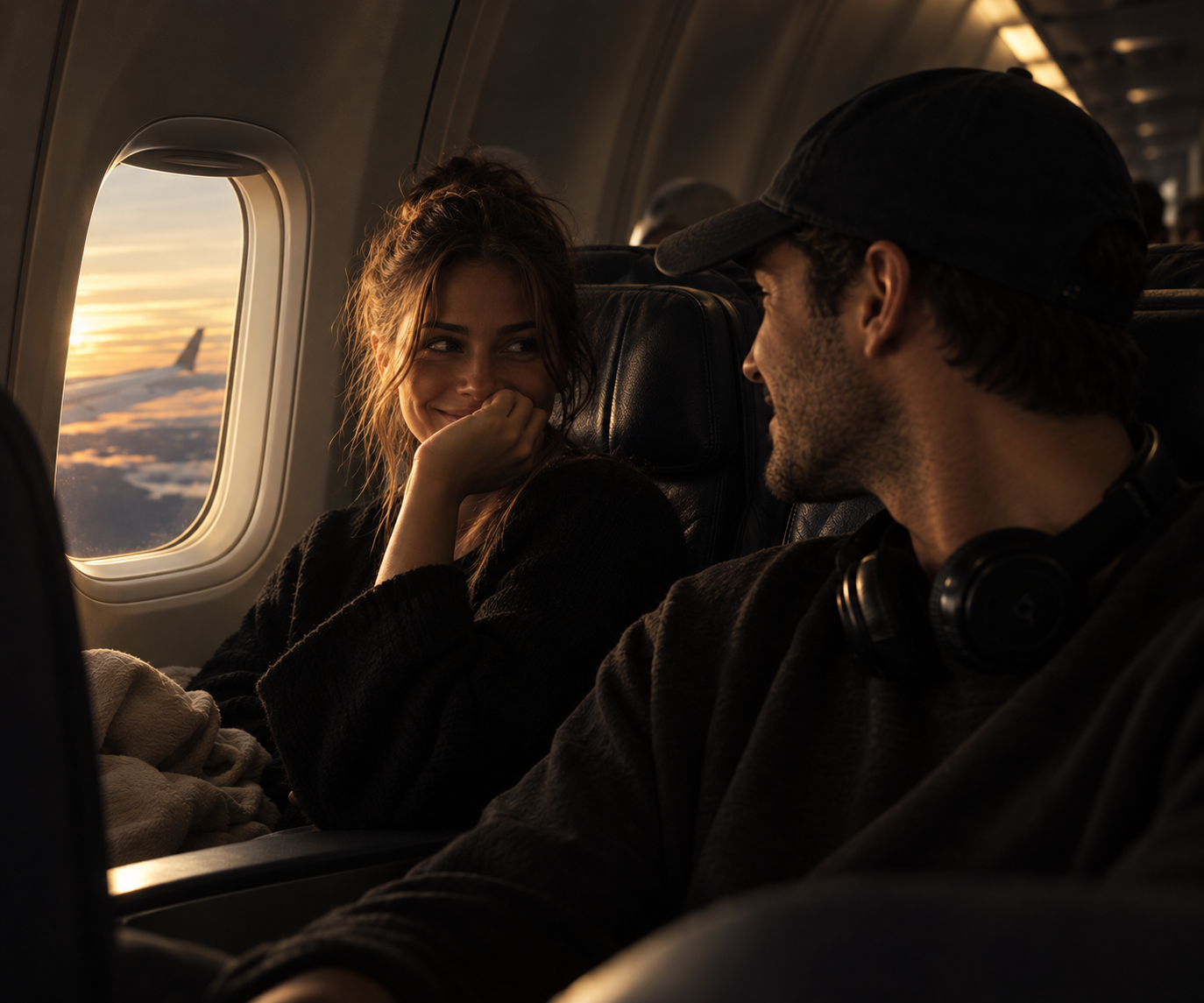
Someone was already sitting by the window. I put my bag overhead, sat down, and immediately noticed her looking at me.
Not casually. She was staring.
I checked my shirt because I'd spilled coffee on myself earlier.
Finally, she said, "You have absolutely no idea who I am, do you?"
That's a dangerous question from a woman you don't recognize. I looked at her for several uncomfortable seconds. Then she smiled.
"Rachel Bennett."
Nothing.
"Lincoln Elementary?"
Still nothing. She looked offended.
"Fifth grade? Mrs. Patterson?"
And suddenly I knew.
"Rachel?"
She laughed.
"There you go."
Rachel had been one of my best friends when we were kids. We traded lunches almost every day because she hated the turkey sandwiches her mother packed, and I hated the tuna sandwiches mine packed. We were also partners in the fifth-grade talent show.
Our act was magic. Neither of us knew magic.
The highlight involved me accidentally knocking over a folding table while Rachel tried to pull a stuffed rabbit from a cardboard box. We finished last.
I hadn't seen her since we were eleven, when her family moved to Arizona.
For the next three hours, we barely stopped talking. She remembered things I'd completely forgotten. The name of my childhood dog. The scar on my chin from falling off my bike. The time I got sent to the principal because she dared me to pull the fire alarm.
"For the record," I told her, "you were a terrible influence."
"You pulled it."
"You provided the idea."
"That's called leadership."
By the time we landed, my face hurt from laughing. At baggage claim, there was an awkward moment where we both knew we were about to walk in different directions.
"So," I said, "do you want to exchange numbers?"
She smiled.
"I was wondering how long that was going to take."
We started texting that afternoon. A week later, we got dinner. Dinner turned into another date. Then another.
About eight months later, Rachel moved into my apartment.
Three years after that, we got married.
Last summer, almost seven years after that flight, we took our four-year-old daughter to visit my parents.
Rachel had the window seat. I was in the middle.
Our daughter was beside me, asking approximately four hundred questions before we'd even taken off.
At some point, she asked how her mom and I met.
"On an airplane," I said.
Rachel leaned around me.
"Because Daddy's flight got canceled."
I looked at her.
"Technically."
"What do you mean technically?"
"Nothing."
She narrowed her eyes.
I changed the subject.
Here's what Rachel still doesn't know.
When the airline employee offered me those two replacement flights, the 6:10 flight had plenty of seats.
The 8:25 had exactly one.
I chose it because the idea of waking up at four in the morning sounded miserable.
That's it. No instinct. No sign from the universe. I wanted two extra hours of sleep. If I'd chosen differently, someone else would've sat in 14B.
Rachel and I might have gone the rest of our lives without seeing each other again.
Sometimes I think about how many moments like that happen without us noticing.
A different checkout line.
A missed train.
A restaurant you almost didn't go to.
A flight you picked because you were tired.
I've made bigger decisions since then.
I've chosen jobs.
Bought a house.
Gotten married.
Decided I was ready to become a father.
But the best decision I ever made took about five seconds.
The agent asked:
"6:10 or 8:25?"
I chose the later flight.
And somehow, I ended up exactly where I was supposed to be.

The Empty Chair Across From Her
I don’t believe in “the universe” having a grand plan, or fate, or any of that. I’m a structural engineer. I spend my days looking at concrete, load-bearing beams, and blueprints. I calculate stress points. I believe in things you can measure.
But then there’s the story of how I met Chloe, and honestly, the math just doesn’t add up.
It happened in October of 2024. I was living in Chicago at the time, and I’d had a brutally exhausting week at work. By Friday evening, my brain was completely fried. All I wanted to do was drag myself to the small, incredibly crowded coffee shop down the street from my apartment, grab a black coffee, and sit in a corner completely undisturbed.
When I walked into the shop, it was pouring rain outside, and the place was packed. Every single table was taken. I got my coffee and was about to head back out into the rain when I noticed a girl sitting at a small two-person table near the window. She had a massive stack of textbooks open, highlighter caps scattered everywhere, and looked completely overwhelmed. The chair opposite her was empty.
Normally, I would never do this, but I was so exhausted I just walked over.
“Hey, I’m sorry to bother you,” I said, pointing to the chair. “Everywhere else is full. Do you mind if I just crash here for ten minutes?”
She looked up, blinking a few times like she was being pulled out of a deep trance. She had these incredibly bright, expressive green eyes. She looked at the chair, then at me, and smiled this tired but genuinely warm smile.
“Of course,” she said, sweeping a pile of loose papers to her side of the table. “Just warning you, I’m currently studying for the bar exam, so if I start muttering Latin legal terms under my breath, feel free to ignore me.”
I sat down. My plan was to put my headphones in and stare at my phone. But within two minutes, she let out this massive, dramatic groan of frustration, dropped her head onto her open textbook, and muttered, “Property law is going to be the actual death of me.”
I couldn’t help it. I laughed.
“Is it the easement rules?” I asked.
She snapped her head up, her eyes wide. “How on earth do you know what an easement is?”
“I’m an engineer,” I said. “I deal with land boundaries and construction permits all day. Property law is basically my version of a light beach read.”
That was it. That was the spark.
For the next two hours, my coffee got completely cold, and her textbooks stayed open but mostly untouched. We just talked. It wasn’t that awkward, forced small talk you usually have with strangers, either. It felt like picking up a conversation with an old friend I hadn’t seen in years. We talked about how terrible the coffee shop’s indie playlist was, our shared hatred of Chicago winters, and our favorite cheap taco spots in the city.
By the time the shop started closing and the baristas were putting chairs on the tables, the rain had stopped. We walked out onto the damp sidewalk together.
I felt this massive surge of nerves. I wanted to ask for her number, but right as I opened my mouth, her phone buzzed in her hand. She looked down at it, and her face fell.
“Oh no, my ride is here,” she said, pointing to an Uber pulling up to the curb. She looked back at me, genuinely disappointed. “I have to run. But... thank you for making property law tolerable.”
“Anytime,” I said.
She turned, ran to the car, and hopped in. The Uber pulled away into Chicago traffic.
It wasn’t until I walked half a block toward my apartment that the crushing realization hit me.
I hadn’t asked for her name.
I hadn’t gotten her number. I didn’t even know what law school she went to. I was just some random guy she had shared a table with for two hours.
I felt like an absolute idiot.
For the next three weeks, I went back to that same coffee shop at the exact same time every Friday. I sat at the same table. I kept my eyes on the door. I even looked around some of the law-school libraries and campus cafés I could think of.
Nothing.
She was just gone. It was like she was a ghost my brain had invented.
Fast-forward to January of 2025. Three months had passed, and I had finally told myself to stop being pathetic and let it go. It was just a nice moment with a stranger, and that was all it was ever going to be.
Then I was assigned to do a structural safety inspection on an old, historic brick building downtown that a developer wanted to remodel. It was a freezing, miserable morning. I was wearing a yellow high-visibility vest, a hard hat, and thick gloves, carrying a clipboard through the dusty, unheated concrete basement of this empty building.
I was checking the foundation columns when the developer’s legal representative came downstairs to give me some updated zoning paperwork.
“Hey,” a voice called from the basement stairwell. “Are you the engineer doing the load-bearing report?”
I turned around, adjusting my hard hat.
Walking down the concrete steps, holding a folder of legal documents and shivering in a heavy wool coat, was the girl from the coffee shop.
Chloe.
She stopped dead on the bottom step.
I stood there frozen, holding a flashlight and looking like Bob the Builder.
We stared at each other for about five seconds in this dusty, dark basement.
Then a slow smirk spread across her face.
“Well,” she said, her voice echoing off the concrete walls. “I guess you really do know a lot about property law.”
I started laughing so hard I dropped my clipboard.
It turned out she had landed an internship at the firm handling the real-estate acquisition for that specific project. Out of all the engineering firms, law firms, buildings, projects, and people in Chicago, somehow the two of us had been sent to the exact same empty basement on a random Tuesday morning.
That night, we finally went on our actual first date.
We didn’t go to a fancy restaurant. We went back to the same crowded coffee shop, grabbed two terrible coffees, and this time, before either of us went anywhere, I got her phone number.
We’ve been together ever since.
We recently signed the lease on our first apartment together. While we were unpacking boxes, I found her old property-law textbook tucked away in a crate. I opened it, and right there on the inside cover, she had taped the receipt from the coffee shop from the day we first met.
I asked her why she kept it.
She just smiled and said, “I thought I’d never see you again.”
I still don’t know if I believe in fate.
I’m an engineer. I’m probably always going to look for the logical explanation first.
But I do know that structures are only as good as their foundations.
And somehow, ours started with two terrible coffees, a property-law textbook, an empty chair, and a rainy Friday night in Chicago.
Stories organized by what haunts us
Each category holds a different kind of truth. Browse by the weight that sits heaviest on your heart, or discover stories that mirror your own silence.
Regret
The choices we replay in the dark hours, wondering if we could have chosen differently.
Loss
The people and moments we've lost, and the grief we carry without speaking its name.
Secrets
The truths we've kept locked away, too dangerous or too fragile to share with anyone.
Longing
The desires and dreams we've abandoned, and the lives we imagine in quiet moments.
Your story stays yours, always
Share safely without names, tracking, or judgment. Every confession is encrypted and held in absolute confidence. What you tell us remains between you and the silence.
No names attached to stories
No data collection or tracking
No judgment, only understanding

Stay in the loop
New stories arrive quietly in your inbox each week, unannounced and honest.
FAQ
Questions about how I Never Told Anyone works and what happens to your story.
Yes. We collect no identifying information, no IP addresses, and no metadata. Your story exists without a name attached. Once submitted, it becomes part of the archive, separate from any trace of who wrote it.
Stories are permanent once published. This is intentional—your truth becomes part of the collective archive. If you have concerns about a specific submission, contact us directly and we'll review your request.
We select stories that resonate deeply, that capture something true about the human experience. There's no algorithm, no ranking system. Some stories are featured, others remain in the quiet archive, equally valuable.
We publish stories about regret, loss, secrets, and longing—the full spectrum of what haunts us. We do moderate for safety, but we don't judge the darkness. If your story is honest, it belongs here.
People like you. People carrying their own weight. People searching for proof that they're not alone in what they've never said aloud. This is a space for witnesses and the witnessed.
Your story matters here
Whether you've been carrying this for years or it just surfaced, there's a place for it. Share what you've never told anyone.