
The Flight Where My Ego Needed It's Own Seat
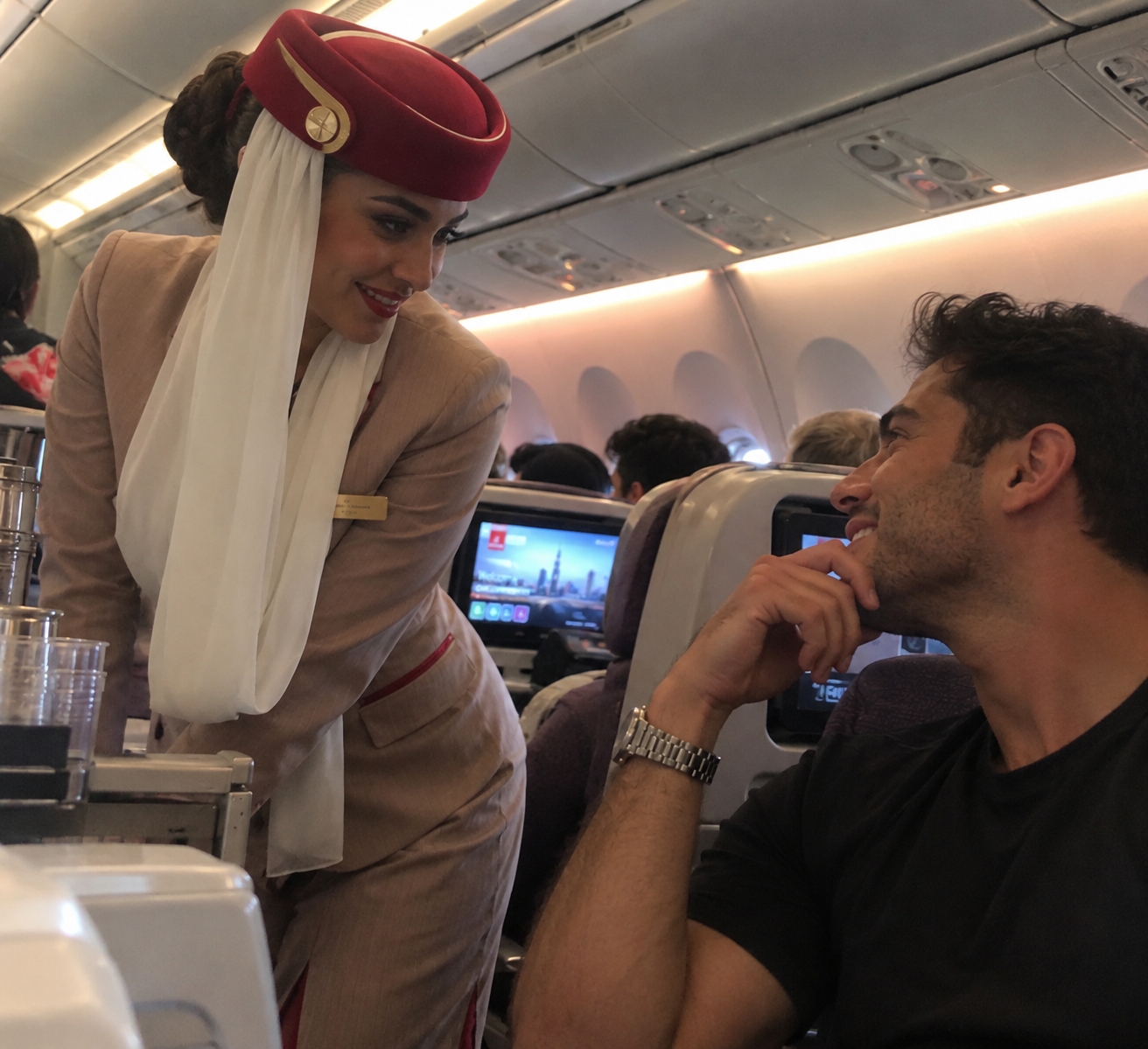
I was flying from Los Angeles to Dubai with my brother on Emirates, and before I continue, I need you to understand the version of me who boarded that airplane. I was confident. Not normal confident either. I mean the kind of confidence where you walk onto a fourteen-hour flight, see what looked like a storm of beautiful flight attendants, and instead of wondering what they're serving for dinner, you think, "This could be the greatest flight of my life."
My brother was apparently traveling to Dubai.
I was apparently entering the Olympics.
Back then I had this theory that economy was where Emirates hid all the younger, newer flight attendants, while business and first had the more senior crews. I have absolutely no idea whether this theory had any basis in reality, but at the time I believed it like I'd personally studied Emirates HR records. Either way, I was in economy, I liked what I saw, and before we'd even taken off I had gone into hunting mode.
The first flight attendant who caught my attention was from the UK. Beautiful, funny, friendly. Naturally, I started ordering things I didn't need just so she'd keep coming back. Water. Coffee. Another water. Something else. At some point I was probably one request away from asking whether Emirates had a screwdriver and a medium-sized houseplant.
Eventually she figured out exactly what I was doing. She'd come over smiling with that look that said, "What does this idiot want now?" We kept talking, I kept flirting, she kept entertaining it, and eventually I asked for her number. A little while later she brought me a cup of coffee with her number written on it.
Gentlemen, at that moment you couldn't tell me shit.
I wasn't sitting in economy anymore. I was sitting on the throne of the British Empire.
What made it worse was that I had already watched other guys try flirting with some of the same flight attendants. I saw the smiles, the little jokes, the attempts to keep conversations going. Nothing. These women were professionals. They had probably heard every line imaginable from Los Angeles to Dubai and back. Some of these poor guys were getting shut down so efficiently they barely realized the conversation was over.
Meanwhile, I'm sitting there drinking coffee with a phone number on it.
This was terrible for my ego.
A normal man would have accepted the victory and gone to sleep. Unfortunately, I have never been accused of knowing when to leave well enough alone.
After midnight, dinner was finished, the cabin was dark and most people were sleeping. That's when my brain produced what I considered at the time to be a brilliant idea: the bathroom. Apparently getting her number somewhere over the Atlantic wasn't enough. I now wanted membership in the Mile High Club.
I went to the bathroom, came back out, found her and told her something was wrong inside. She asked what was wrong. I told her, "I can't explain it. You have to see it."
This should have been the moment Emirates opened an emergency exit and threw me into the ocean.
Instead, she followed me.
She stopped at the bathroom door and asked again what was wrong. I told her to come inside. At this point she obviously knew there was absolutely nothing wrong with that bathroom. She looked left, looked right, saw nobody around and stepped inside.
Then she told me, "I can't be in here for more than thirty seconds."
Thirty seconds?
Lady, you have severely overestimated me.
We started kissing. Things escalated quickly. Then I encountered an obstacle nobody had mentioned in the Mile High Club brochure: her uniform.
Skirt. Stockings. Underwear. Layers upon layers of aviation-grade security.
I'm trying to figure out the logistics while the clock is ticking, and suddenly it becomes obvious that successfully completing this operation would require tools, planning permission and possibly a small construction crew.
She started laughing and told me, "This isn't happening."
I looked at her outfit. She looked at me. I looked back at the outfit.
She was right.
I'd need a chainsaw.
She fixed herself, laughed again and walked out, leaving me standing in an Emirates bathroom like a man whose Mile High Club application had just been denied because he failed to bring the required documentation.
I returned to my seat. My brother looked at me. I said nothing.
That should have been the end of it.
It wasn't.
Because on a flight that long, crews rotate. A few hours later, another crew appeared, and somewhere inside my deeply malfunctioning brain a voice whispered, "New game."
Another beautiful flight attendant. Another conversation. More flirting. Eventually, another number.
This time I had learned one important lesson: stay away from the bathroom.
Later I caught her during a quiet moment near the curtained galley area. We started kissing and went at it for maybe twenty seconds before she pushed me away, smiling, and told me to go back to my seat.
I walked back like I'd just successfully negotiated an international peace treaty.
My brother had finally had enough.
"What the FUCK is wrong with you?"
I started laughing.
"Relax, bro."
"RELAX? YOU ARE WILD."
By the time we landed in Dubai, I had somehow collected five flight attendants' numbers.
And one passenger's.
Six numbers. One flight. Economy.
And remember, I'd watched other men trying their luck during that same flight. They were throwing out lines, making conversation, trying to get that extra smile. Nothing. Some couldn't get thirty seconds of attention from women I'd been talking to throughout the flight. Every time another guy struck out, my already dangerously inflated ego gained another ten PSI.
By the time the wheels touched down in Dubai, my ego needed its own passport.
I stepped off that aircraft feeling like I'd personally conquered a small country. My brother stepped off looking like he'd spent fourteen hours supervising a dangerous zoo animal.
And the funniest part was what happened inside my head afterward. Instead of thinking, "That was ridiculous. Maybe I should calm down," I thought:
"If I can do this in economy... imagine what I can do in business class."
That thought should have been medically evaluated.
Eventually, I did fly business class.
I'm going to leave what happened on that flight for another story because, frankly, some things are better left anonymous. Let's just say my theory was thoroughly tested.
For years I genuinely believed that first Emirates flight proved I possessed some extraordinary international level of game unavailable to ordinary men. Five flight attendants. One passenger. Los Angeles to Dubai. I was basically the Muhammad Ali of unnecessary flirting.
Looking back now, I'm slightly less convinced.
Maybe I had game. Maybe they thought I was funny. Maybe fourteen hours trapped inside an aluminum tube simply lowered everybody's standards.
I don't know.
What I do know is that while hundreds of perfectly normal passengers were peacefully sleeping underneath their little Emirates blankets, my brother was sitting beside a grown man who had somehow convinced himself that an economy ticket was an all-inclusive singles resort.
And honestly, the real hero of this story was him.
Because he had fourteen hours to smother me with one of those tiny airplane pillows.
And somehow, he showed restraint.
He Waited for Her Too
My wife came home from work at 5:30 every evening.
Not approximately 5:30.
Exactly 5:30.
I used to joke that you could set the clocks by her.
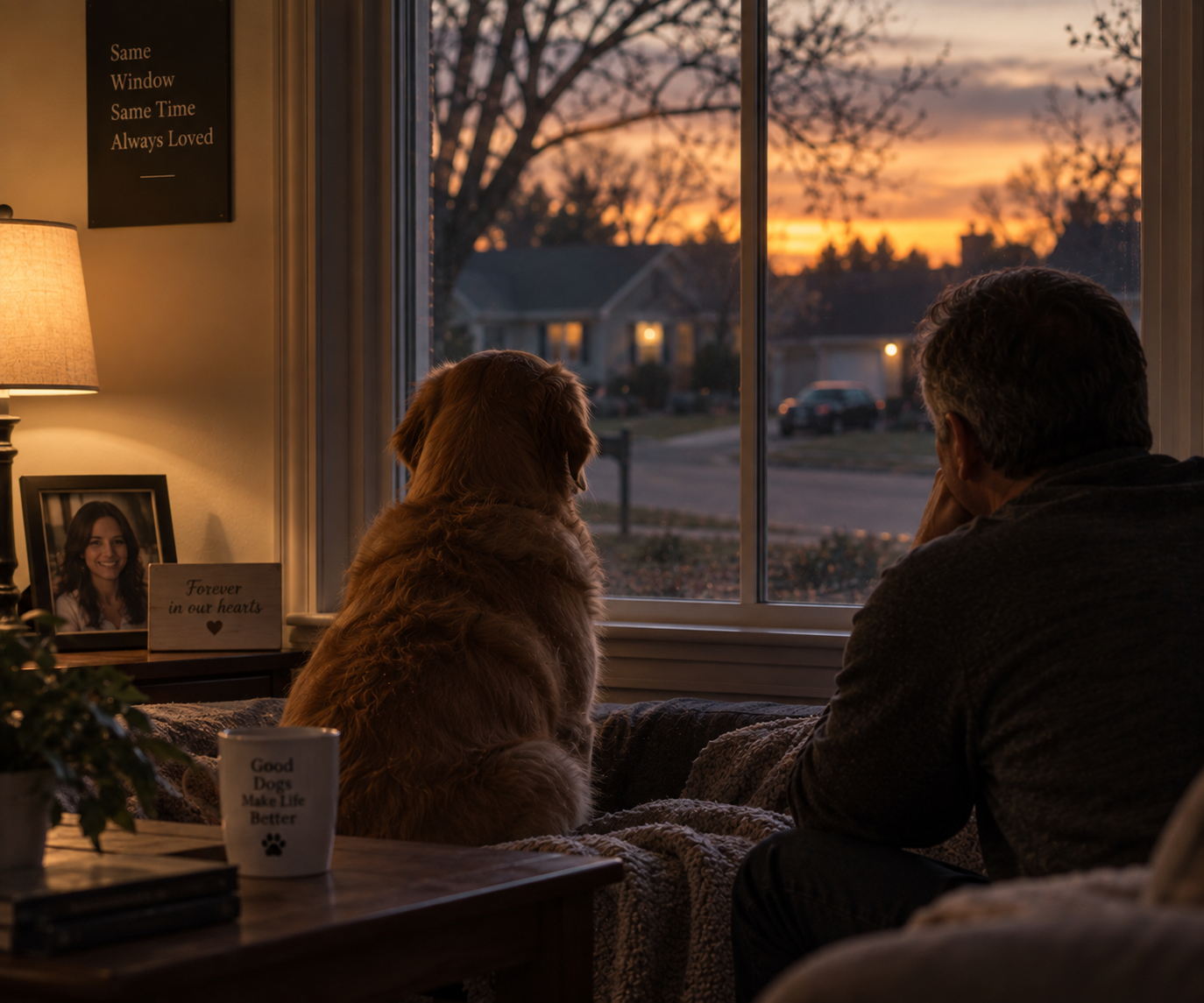
And every afternoon, about ten minutes before she arrived, our dog Charlie would take his position at the living room window. Charlie was a golden retriever we'd adopted when he was barely a year old.
Technically, he was our dog. But everyone knew the truth.
He was hers.
At 5:20, he'd climb onto the couch and stare through the window. At the sound of her car turning onto our street, his tail would start hitting the cushions. Then he'd jump down and wait at the door. By the time she walked inside, he was usually carrying something to greet her with.
A tennis ball.
A sock.
Once, one of my shoes.
She'd kneel on the floor in her work clothes and let him climb all over her.
"Did you miss me?"
Every day.
Same question.
Same answer.
For nine years.
Then my wife got sick. At first, we thought we had time. Doctors are careful with their words when they don't want to make promises.
Months became hospital visits. Hospital visits became overnight stays.
Eventually, 5:30 came and went without her.
Charlie still waited.
When she was well enough to come home, he seemed to understand that things were different.
He stopped jumping on her.
Instead, he'd walk slowly over and rest his head in her lap.
She would run her fingers through the fur behind his ears.
"My good boy."
Those were some of the last words I heard her say to him.
My wife died on a Tuesday morning in February.
She was fifty-one.
For the first few weeks afterward, I barely noticed anything.
People brought food.
Flowers arrived.
There were phone calls I didn't answer and sympathy cards I couldn't bring myself to open.
Charlie followed me everywhere. He slept beside my side of the bed. He waited outside the bathroom. If I moved to another room, he followed. I thought he was worried about me. Maybe he was.
Then one evening I noticed something.
At 5:20, Charlie got up.
He walked into the living room.
Climbed onto the couch.
And looked out the window.
I didn't think much of it.
Until he did it again the next day. And the next.
At exactly 5:20.
He'd sit there staring down the street. Around 5:30, his ears would lift whenever a car passed.
Sometimes he'd stand.
Then the car would keep going.
And he'd lie back down.
The first time I understood what he was doing, I had to leave the room.
I sat on the kitchen floor and cried.
I'd spent weeks thinking I was the only one waiting for someone who wasn't coming home. I wasn't. Charlie waited every evening.
Spring came. Then summer.
Still, at 5:20, he'd go to the window.
I never tried to stop him.
Eventually, I started sitting beside him. Neither of us needed anything from the other.
We just watched the street. Some evenings I'd tell him about her.
"You remember how she used to sneak you chicken under the table?"
His ears would move when I said her name. I don't know how much he understood. Probably more than I gave him credit for.
It's been two years now. Charlie is getting old.
His face has gone white, and climbing onto the couch takes him longer than it used to. But most evenings, around 5:20, he still makes the trip to the window.
And most evenings, I sit beside him.
At 5:30, cars turn onto our street.
Headlights pass across the walls.
Doors open. People come home to the people waiting for them. Ours doesn't.
For a long time, I thought grief was something uniquely human.
That we were the ones who remembered dates and routines and empty chairs.
Then I watched an old dog stare down the same street every evening.
Now I think grief is simpler than that.
Maybe it's just love with nowhere to go.
Charlie still waits for her at 5:30.
And if I'm being truthful...
"so do I."

The One Who Showed Up
I used to think I had a lot of friends.
Not Facebook friends or people I occasionally had a beer with. I mean actual friends. Guys I'd known for ten, fifteen, even twenty years. Guys whose weddings I'd been in, whose kids called me uncle, whose parents I knew by first name.
If you'd asked me five years ago who would be there if my life ever fell apart, I could've given you a list without thinking.
I would've been wrong about most of it.
I owned a small commercial flooring company in Las Vegas. I'd started it when I was 31 with one van, two employees, and more confidence than experience. By 40, I had twelve employees, a warehouse, several trucks, and enough business that I finally stopped worrying every time the phone rang.
I wasn't rich, but I was doing well.
And when you're doing well, your life gets crowded.
There were dinners, UFC nights, weekends in Scottsdale, birthdays, golf trips. My house was usually the place everyone ended up because I had a pool and liked having people around. I was also the guy who picked up the check more often than he should have.
I didn't mind.
If one of my friends needed work done at his house, I'd send one of my crews. If somebody was between jobs, I'd find something for him to do. I loaned money a few times. Helped with a couple of down payments. Covered hotel rooms on trips when someone was short.
I never kept a list.
They were my friends.
Then, in less than a year, the business came apart.
Two large customers owed us money at the same time. One eventually filed bankruptcy. I had personally guaranteed equipment and credit lines because that's what you do when you're convinced things will turn around next month.
They didn't.
I started using my savings to make payroll. Then credit cards. Then money I'd put aside for taxes.
By the time I finally admitted the company wasn't going to survive, I'd burned through almost everything.
The warehouse closed. The trucks went back. I sold my house before the bank could make that decision for me and moved into a one-bedroom apartment on the other side of town.
At first, my friends were supportive.
"You'll bounce back."
"You're too smart to stay down."
"Anything you need, brother."
I heard that last one a lot.
Anything you need.
The strange thing was that once I actually needed something, I started hearing from people less.
I don't mean I was calling everyone asking for money. I wasn't. Mostly I just didn't want to be alone.
The group dinners continued, but I stopped getting invited to some of them. I understood at first. I wasn't exactly fun to be around. I was embarrassed, stressed and probably depressing.
But then weeks would pass without anyone calling.
Guys who used to call me three times in one afternoon suddenly became very busy.
One friend told me, "Man, I've got so much going on right now."
I remember looking at Instagram later that night and seeing him drinking at a steakhouse with three guys from our group.
That one hurt.
Around that time, a guy named Omar started texting me.
Omar wasn't one of my close friends.
I'd met him maybe two years earlier through a mutual friend. He owned a small auto repair shop in Henderson. We'd probably hung out five or six times total, always because other people were there.
The first text was nothing special.
You good?
I gave him the answer I'd been giving everyone.
Yeah bro. Just figuring some stuff out.
A few days later he texted again.
I'm getting lunch. You eat yet?
I told him I wasn't hungry.
He showed up at my apartment anyway with two chicken shawarma plates.
We ate sitting on the floor because I hadn't bought a dining table yet.
He didn't ask how much money I'd lost. He didn't give me advice. He didn't tell me everything happened for a reason.
We watched basketball and talked about cars.
Then he left.
The next week, he called again.
And the week after that.
Sometimes we'd get coffee. Sometimes he'd stop by for twenty minutes after closing his shop. Once he came over and found me still wearing the same sweatpants I'd been wearing two days earlier.
He looked at me and said, "Put shoes on."
"Why?"
"Because you look terrible."
He took me to get a haircut.
That was it.
No speech. No dramatic conversation.
A haircut.
I don't know why I remember that day so clearly, but I do.
Maybe because I had spent months feeling like I was disappearing, and this guy I barely knew had noticed.
One afternoon, I finally asked him why he kept checking on me.
He shrugged.
Then he told me that years earlier, his shop had nearly failed. He'd been behind on rent, his wife was pregnant, and he'd stopped answering people's calls because he was embarrassed.
"Everybody thought I wanted space," he said. "I didn't. I wanted somebody to come get me."
That made sense to me in a way most advice didn't.
So he kept coming to get me.
It took about a year before I started feeling like myself again. I took a project-management job with another flooring company. It was hard working for somebody else after being the owner, but eventually I stopped seeing it as humiliation and started seeing it as a paycheck.
Slowly, I rebuilt.
Some of my old friends started calling again too.
There wasn't some big confrontation. Nobody admitted they'd disappeared. Life just became more comfortable, and suddenly I was easier to be around again.
A few of them are still in my life.
But something changed in me.
I stopped using words like brother so easily.
Omar and I are close now. Our families know each other. I was at his daughter's graduation last year. He came to my daughter's wedding.
The funny thing is, if you'd shown me a picture of all my friends before my business failed and asked me which one would be the person sitting on my apartment floor eating shawarma with me when I had almost nothing left, I probably wouldn't have pointed to him.
I would've pointed to the guys I'd known for twenty years.
Life taught me differently.
One thing I would say to anyone reading this is that don't judge the people in your life only by how much fun you have together. Parties don't tell you much. Vacations don't tell you much. Neither do birthday posts, group chats, or somebody calling you "brother."
Pay attention to who notices when you disappear.
Pay attention to who calls when you have nothing interesting to say. Who sits beside you when there's nowhere exciting to go. Who still wants your company when you can't offer connections, money, favors or a good time.
And maybe more importantly, be that person for somebody else.
Sometimes the person having the worst year of his life isn't asking you to fix anything.
Sometimes he just needs someone to show up with lunch and tell him to put his shoes on.
The Dog Who Wasn't Mine
I never wanted a dog.
I should probably start there because everyone who knows me now finds that hard to believe.
I was forty-six, divorced, living alone in a small house outside Sacramento, and pretty comfortable with the fact that my life had become predictable. I worked, came home, made something to eat, watched television and went to bed. On Saturdays I did laundry. On Sundays I called my daughter.
It wasn't an exciting life, but it was quiet, and after a difficult divorce, quiet felt pretty good.
Then one Tuesday evening, I came home and found a dog sitting on my porch.
He was some kind of shepherd mix, maybe six or seven years old. One ear stood straight up and the other folded over at the top. He had a faded blue collar but no tag.
I tried walking around him to unlock my door.
He stood up and followed me.
“No.”
He wagged his tail.
“You don't live here.”
More wagging.
I gave him some water because it was hot outside. Then I made the mistake that changed everything: I gave him half of the chicken from my refrigerator.
He slept on my porch that night.
The next morning he was still there.
I posted his picture online, called the local shelter and took him to a veterinarian to check for a microchip. Nothing. Nobody contacted me.
For almost two weeks, I kept telling people I was "temporarily taking care of him".
Meanwhile, I bought him a bed, food bowls, a leash, treats and one of those ridiculous squeaky toys shaped like a beer bottle.
My daughter came over one afternoon, looked around my living room and said, “Dad, you realize you have a dog now, right?”
“I don't have a dog.”
She pointed at him asleep on my couch.
“You bought him a blanket.”
“That doesn't mean anything.”
His name became Murphy.
I don't even remember deciding on it. I called him that once and he looked at me, so apparently the matter was settled.
Murphy wasn't particularly impressive. He didn't know tricks. He hated getting wet. He was afraid of the vacuum cleaner and once barked at a plastic bag blowing down the street for almost five minutes.
But every day when I came home, Murphy acted like I had returned from war.
It didn't matter if I'd been gone nine hours or nine minutes. Same celebration.
Eventually, I started coming home earlier.
Then I started taking walks after dinner because Murphy expected them. I met neighbors I'd lived beside for years and had never spoken to. I lost twelve pounds. My daughter started visiting more because she loved him.
Without realizing it, the quiet life I thought I wanted had actually become a pretty lonely one.
Murphy fixed that without ever asking me a single question about it.
We had almost seven years together.
Then one morning he didn't finish breakfast.
Anyone who has loved an old dog knows how quickly your mind notices something like that.
At the veterinarian, they found a mass. More tests followed. Cancer.
There were treatments we could try, but Murphy was already old and the vet was honest with me about what those treatments might buy us and what they might cost him.
I took him home.
For the next six weeks, I spoiled the hell out of that dog.
Chicken whenever he wanted it. Car rides with the window down. Slow walks where I let him smell the same tree for ten minutes if that's what he felt like doing.
His last day was a Sunday.
My daughter came over in the morning. We took Murphy to the little park we'd gone to hundreds of times. He couldn't walk very far anymore, so we sat under a tree.
At one point, he put his head on my leg.
My daughter started crying.
I told her, “Don't. He's had a good life.”
Then she said something that broke me.
“So have you, Dad. Since he showed up.”
That afternoon, the veterinarian came to the house.
Murphy was lying on his blanket with his head in my lap when he died.
For the first time in almost seven years, I went to bed without hearing his nails clicking across the floor.
The house felt enormous.
I lasted eleven days.
Then my daughter called.
“I'm coming over.”
She showed up carrying a leash.
I knew immediately what she was doing.
“No.”
“Get in the car.”
“I don't want another dog.”
“I know.”
We drove to the county shelter.
I told her I was only looking.
Then I saw this little brown dog sitting at the back of one of the kennels. She wasn't barking like the others. She just watched me.
The employee told me she'd been there almost three months. She was around five years old, nervous around strangers and had been returned once because she took too long to adjust.
I sat on the floor.
For several minutes, she wouldn't come near me.
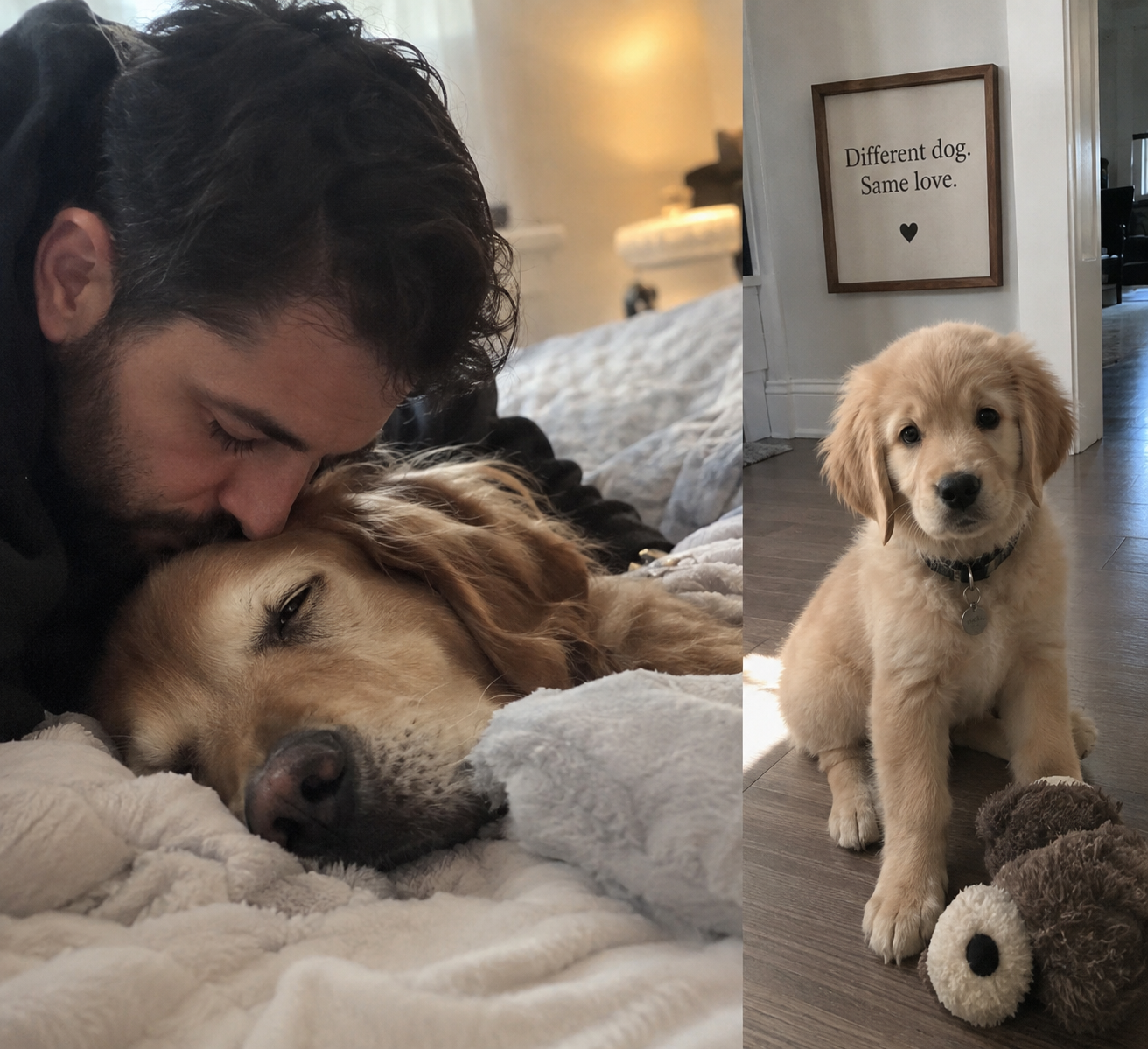
Then she slowly walked over and put one paw on my knee.
I started crying right there in the shelter.
Her name is Millie.
I've had her for two years now.
She's nothing like Murphy. She loves water. She hates car rides. She steals socks and hides them behind the couch. And when I come home, she doesn't run to the door.
She waits in the hallway until she knows it's me.
Then her whole body starts wagging.
I used to feel guilty about loving her.
It felt like somehow I was replacing Murphy.
But I've realized something since then.
Murphy wasn't replaced.
He's the reason Millie is here.
A dog I never asked for showed up on my porch and taught a lonely middle-aged man how much room there was in his life for another living thing.
And when he left, that room didn't disappear.
It was just empty again.
So I filled it.
Not because I stopped missing him.
Because he taught me what to do with the love he left behind.
I Thought I Had More Time
My sister and I stopped speaking over something that, looking back now, wasn't worth losing a single afternoon over.
Her name was Lauren. She was three years younger than me, and we grew up in Riverside, California. We shared a bedroom until I was fifteen, fought over clothes, covered for each other when we came home late, and knew exactly how to irritate each other in ways nobody else could.
We were close as adults too, although not in the call-each-other-every-day kind of way. Lauren lived in San Diego, and I was still in Riverside with my husband and two kids. We'd talk a couple of times a week, see each other on birthdays and holidays, and occasionally take our mom to lunch together.
Then our mother got sick. Nothing terminal, but she needed surgery and several weeks of help afterward. Lauren and I disagreed about almost everything—where Mom should recover, who would stay with her, whether we should hire someone during the day, and who was doing more.
That last part became the problem.
I felt like everything had fallen on me because I lived closer. Lauren felt like I constantly reminded her of that. One afternoon, standing in our mother's kitchen, we finally exploded.
Lauren accused me of making her feel guilty whenever she couldn't drive up from San Diego. I told her maybe she felt guilty because she should.
I still remember her face when I said it.
She told me, "You always do this. You keep score."
I said, "Somebody has to."
There were more words after that. I honestly don't remember most of them, and that's one of the things that bothers me now. Something important in my life was breaking, and I can't even remember what I was supposedly fighting so hard to prove.
I do remember how it ended. Lauren grabbed her purse and said, "I'm not doing this with you anymore."
I said, "Good."
Then she left.
That was March 2019.
For the next few months, we communicated through our mother like children. I'd say, "Tell Lauren Mom's appointment is Tuesday." Lauren would tell Mom, "Tell your sister I'll take you next Friday."
Our mother hated it. She kept saying, "You're sisters. Enough."
Neither of us listened.
Eventually Mom recovered, so there wasn't even a practical reason for Lauren and me to speak anymore. Birthdays passed. Thanksgiving passed. At Christmas, we were both at our mother's house and barely acknowledged each other. We sat at opposite ends of the table.
I remember Lauren laughing at something my son said and feeling annoyed that she could sit there laughing as if everything were normal.
I think about that now and can't believe how stupid anger can make you. Someone you love is sitting ten feet away, laughing with your child, and somehow you find a reason to resent the sound of it.
The following February, Lauren texted me.
Can we please stop this? I miss my sister.
I read it while standing in line at Target.
I didn't respond.
Not because I didn't miss her. I did. I missed sending her stupid pictures. I missed calling her when Mom was driving me crazy. I missed the way she'd answer the phone with "What do you want?" even though she was usually the one who had called me first.
But I wanted an apology.
More specifically, I wanted her to apologize first.
A few days later, she called. I let it go to voicemail. She left a message saying she was going to be in Riverside the following weekend and asked if I wanted to get coffee. She said we didn't even have to talk about Mom.
I listened to the voicemail twice.
Then I put my phone down and went on with my day.
She called once more that weekend. I didn't answer that one either.
I told myself I needed more time.
The truth is uglier than that.
I wanted her to try harder.
Three weeks later, on a Monday morning, my mother called me at work. Lauren had been in an accident on Interstate 15 coming back from visiting friends near Temecula. Another driver crossed into her lane.
She died before my mother reached the hospital.
She was 36.
There's a strange thing that happens when somebody dies while you're angry with them. Your brain keeps trying to continue an argument that suddenly has nowhere to go.
For weeks, I replayed that day in Mom's kitchen. I rewrote it a hundred different ways. Sometimes I didn't say what I said. Sometimes I followed Lauren outside. Sometimes she came back in and we figured it out.
But mostly, I replayed the phone calls.
Especially the voicemail.
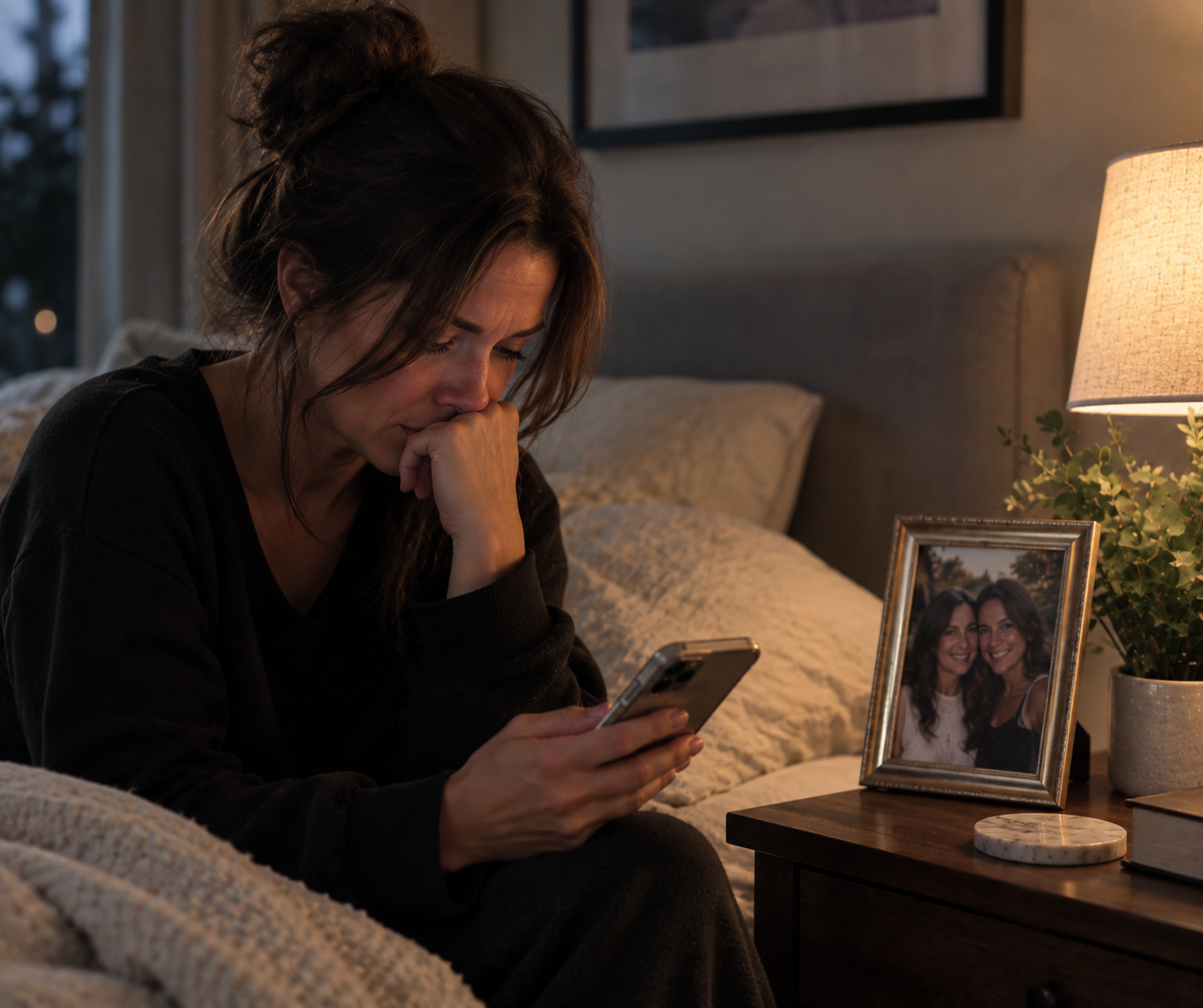
I'd deleted it from my regular messages, but it was still in the deleted folder. I found it the night after her funeral.
Her voice sounded completely ordinary. That was the hardest part. She wasn't crying. There was no dramatic speech. She just sounded like my sister.
"Hey. It's me. I'm going to be up there Saturday. Do you want to get coffee or something? We don't have to talk about all the stupid stuff. I just don't want this anymore. Call me."
There was a short pause before she added, "Love you."
I listened to that message so many times that eventually I knew where she took a breath.
For a long time, I hated myself for not answering. People tried to comfort me. They said I couldn't have known. They said sisters fight. They said Lauren knew I loved her.
All of that was probably true.
None of it changed the fact that she had opened a door and I chose not to walk through it.
My mother died four years later. When we cleaned out her house, I found a box of photographs in the hallway closet. There were hundreds of pictures of Lauren and me—Halloween costumes, school pictures, Christmas mornings, bad haircuts, graduations, my wedding, Lauren holding my daughter the day she was born.
I sat on the floor going through them for almost two hours.
Thirty-six years of being sisters.
And somehow, while Lauren was alive, I'd allowed one ugly year to feel bigger than all of them.
That's the part I have the hardest time forgiving myself for.
It's been more than six years now. I still have Lauren's voicemail. I've changed phones three times and transferred it every time. I don't listen to it much anymore because I don't need to.
I know every word.
All I want to say is that If you're not speaking to someone you love, I'm not going to pretend I know what happened between you. Some relationships need distance. Some people hurt us in ways that shouldn't be excused simply because they're family.
But sometimes it isn't that complicated.
Sometimes it's pride. Sometimes it's an argument neither person can even remember properly anymore. Sometimes two people are sitting on opposite sides of the same silence, each waiting for the other one to cross it first.
If that's where you are, think carefully about what you're protecting.
I thought answering Lauren meant admitting I was wrong.
Now I'd give almost anything to sit across from my sister with two cups of coffee and tell her she was right about everything.
She tried to end our argument.
I thought I had more time to decide whether I was ready.
I didn't.
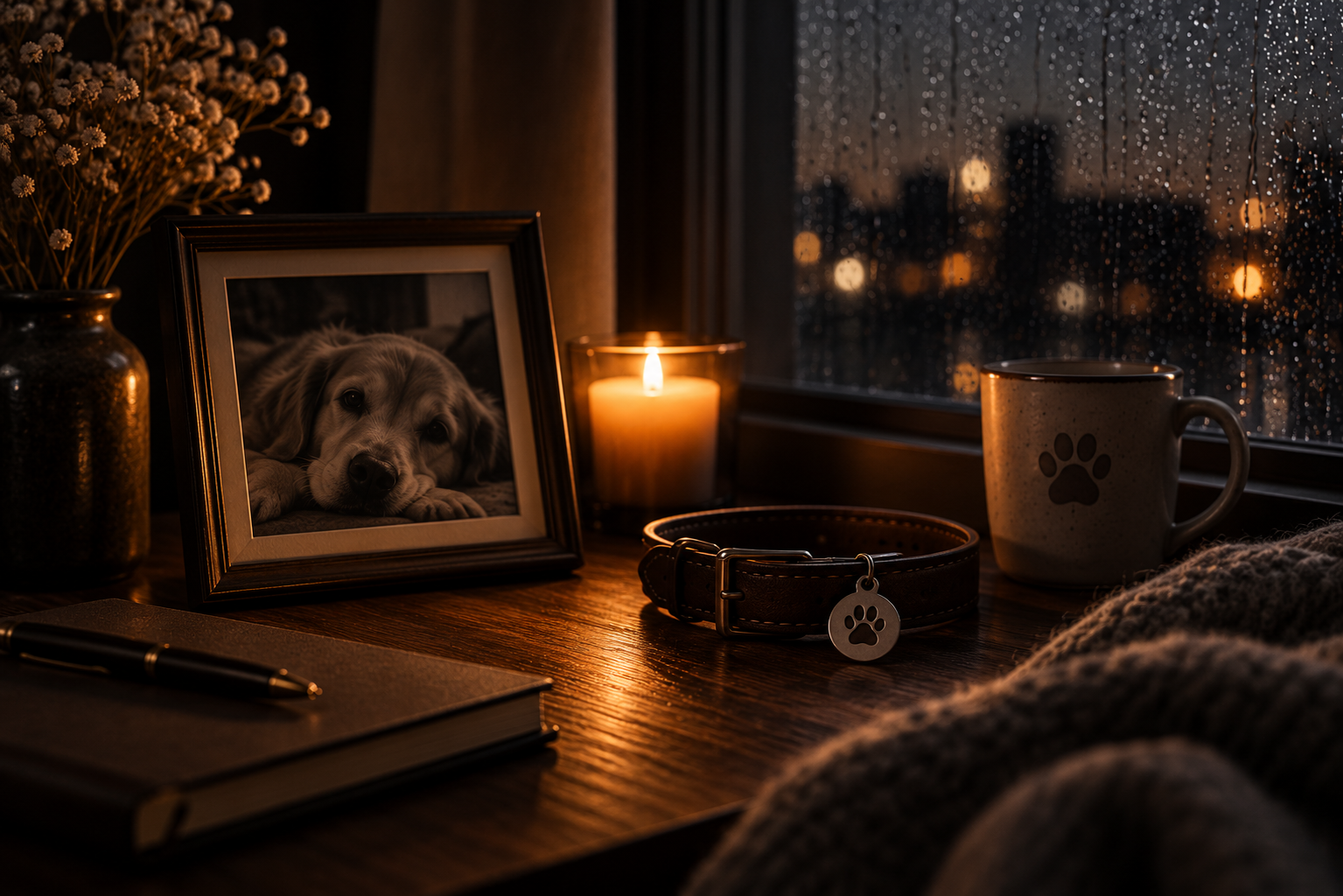
The Collar is Still Hanging By the Door
The last promise I made to my dog is the only promise I've ever broken.
Her name was Daisy.
She wasn't expensive.
She wasn't a purebred.
She wasn't even the dog I had gone to adopt.
I had walked into the shelter looking for a young Labrador I'd seen online.
Instead, an old volunteer pointed toward the corner kennel.
"If you have a minute," she said, "would you say hello to her? Nobody ever does."
Daisy was twelve years old.
Her muzzle had turned completely white. One ear never stood up.
She had arthritis in both back legs. According to the paperwork taped to her kennel, she had spent almost nine months waiting for someone to take her home.
Nine months.
I sat down outside her kennel.
She slowly walked over, leaned against the gate, and closed her eyes while I scratched behind her ears.
She didn't bark.
She didn't beg.
She simply rested her head against the fence as if she'd already decided I was enough.
I never even looked at the Labrador.
An hour later, Daisy was asleep in the passenger seat of my truck.
The volunteer cried as we drove away.
"So did I."
People thought I was crazy.
"Why adopt such an old dog?"
"You'll barely have any time together."
"You're just setting yourself up for heartbreak."
Maybe they were right.
But I couldn't stop thinking about how many people had walked past her because they wanted more years instead of a better ending.
Those two years became some of the happiest of my life.
Every morning she'd follow me into the kitchen, waiting patiently for the tiny piece of toast she somehow convinced herself she deserved.
Every evening we'd sit on the porch watching the sun disappear behind the trees.
She couldn't run anymore.
She couldn't chase balls.
Most walks were slow enough for children to pass us.
Neither of us cared.
We weren't trying to get anywhere.
We were simply together.
One night, while rubbing her gray face, I whispered something I thought she'd never understand.
"I promise you..."
"You'll never die in a shelter."
I kissed the top of her head.
She sighed.
A few months later, Daisy stopped eating.
The veterinarian was gentle.
Her kidneys were failing.
There wasn't anything left to do except make her comfortable.
The appointment was scheduled for Friday morning.
Thursday night, I carried her outside one last time.
She was too weak to walk on her own.
We sat together on the porch for almost an hour.
I talked.
She listened.
I thanked her for every ordinary day she had somehow made extraordinary.
When we finally went back inside, I laid a blanket beside my bed.
"I'll be right here," I whispered.
Sometime around three in the morning, I woke up because the house felt strangely quiet.
I reached down beside the bed.
The blanket was empty.
For one terrifying second I thought she'd wandered off.
Then I found her.
She had quietly made her way to the front door.
She was lying beside her leash.
As if she was waiting for one more walk.
She passed away before the sun came up.
I never made it to the appointment.
For weeks afterward, I couldn't move her collar.
It still hangs by the front door today.
Not because I expect another dog to wear it.
Because every time I reach for my keys, I remember something.
Daisy didn't need ten more years to change my life.
She only needed someone willing to give her one good ending.
People tell me I rescued an old shelter dog.
They're wrong.
She rescued something in me.
Before Daisy, I thought love was measured by how long it lasted.
She taught me it's measured by how completely you choose someone while you have the chance.
Whenever people ask if I'll adopt another senior dog, my answer is always the same.
"Without question."
Because somewhere tonight...
There's another old dog lying quietly in the corner of a shelter.
Watching families walk past.
Wondering if this will be another day nobody chooses them.
If I can change that for even one more dog...
Then Daisy's story didn't end with her.
It simply found another beginning.
I Don't Believe My Own Promises Anymore
I’ve cheated in every serious relationship I’ve ever been in.
There isn’t a nicer way to say it. I could tell you that some relationships were already falling apart, that I was young the first few times, that alcohol was involved sometimes, or that I wasn’t getting what I needed at home. I’ve used every one of those excuses before.
The truth is much simpler.
I cheated because I wanted to.
And then I did it again.
I’m thirty-six now. I’ve had four relationships that I would consider serious, including the one I’m in now. Every one of those women has eventually discovered some version of the same person hiding behind the man they thought they knew.
Sometimes it was messages. Sometimes it was someone I met while traveling for work. Sometimes it was a woman I already knew and had been telling my girlfriend was “just a friend.”
I became very good at separating things in my head. I could spend Saturday afternoon with my girlfriend, cook dinner with her, lie in bed watching a movie, tell her I loved her, and somehow put what I had done two nights earlier into a completely different compartment.
That’s probably the part I’m most ashamed to admit.
Because I did love some of them.
I know people will read that and say you don’t cheat on someone you love. Maybe they’re right. I don’t know anymore. All I know is that I felt love for them. I missed them when they were gone. I worried when they were sick. I remembered their birthdays. I knew how they took their coffee and what made them laugh.
And I still cheated.
Every time I got caught, I became the person I should have been before I did it.
I cried. I apologized. I handed over my phone. I deleted numbers. I unfollowed women. I promised there would never be another secret conversation, another hotel room, another lie about where I had been.
And in those moments, I meant it.
That’s what makes this difficult to explain.
I wasn't standing there thinking, I'll tell her whatever she needs to hear and then do it again.
I genuinely believed I was going to change.
For a while, I usually did.
Three months. Six months. Once, almost a year.
Then somebody would flirt with me. Or I’d be traveling alone. Or I’d download an app just to “look.” I’d tell myself that messaging wasn't cheating. Then I'd meet someone for a drink and tell myself a drink wasn't cheating.
Eventually, I'd cross the same line again.
I've wondered whether I'm addicted to sex. I don't know if that's actually what this is. Maybe I'm addicted to being wanted. Maybe it's the secrecy. Maybe I need the validation. Maybe I'm just selfish and have spent years trying to find a diagnosis that sounds better than that.
Friends have told me to go to therapy.
I don't believe in it.
Maybe that's stubborn. I've always had this idea that I'd sit in an office once a week, pay someone hundreds of dollars to ask me how things make me feel, and walk out exactly the same person. I keep thinking I should be able to fix this myself.
Except I've been saying that for years.
My current girlfriend caught me eight months ago.
She found messages on my phone while I was showering. I remember walking into the bedroom and seeing her sitting on the edge of the bed holding my phone.
She didn't scream.
She just asked, “How many times?”
I lied.
I said once.
She asked again.
I admitted there had been more.
Then she asked me something none of my exes had ever asked.
“Do you actually think you're going to stop?”
I immediately said yes.
She looked at me for a long time and said, “That's not what I asked.”
I still think about that.
She stayed.
I promised her everything I've promised before. I gave her my passwords. I stopped going out without her for a while. I told her she could check my phone whenever she wanted.
And I haven't cheated on her again.
Yet.
I hate that I added that word.
Because that's the confession.
I want to tell you I've finally learned my lesson. I want this story to end with me saying losing people I loved scared me straight and I'm a different man now.
But I don't know if that's true.
The thoughts are still there.
I still notice opportunities. I still feel that rush when someone new shows interest in me. Sometimes I catch myself beginning the same little negotiations in my head that have always come before the cheating.
It's only flirting.
I'm not going to actually do anything.
She'll never know.
And that's when I realize how little I trust myself.
So this isn't really an apology where I'm asking anyone to forgive me.
Especially my ex-girlfriends.
Some of you gave me another chance after I swore there would never be another woman. Some of you blamed yourselves. One of you asked me what the other woman had that you didn't.
I told you that you hadn't done anything wrong.
That might have been the most truthful thing I said.
You weren't missing anything.
I was.
And to the woman I'm with now, I'm sorry because you've already heard every promise I know how to make.
You deserve certainty from me, and I don't know how to give you that.
I don't want to keep living like this. I don't want another woman sitting on the edge of a bed holding my phone. I don't want to keep hurting people and then becoming devastated when they finally stop believing me.
But I'm also tired of saying, I'll never do it again, as though saying it strongly enough will somehow make it true.
Maybe the thing I need to admit isn't that I can't change.
It's that whatever I've been doing to change clearly hasn't worked.
And after all these years, I'm finally scared that one day I'm going to meet someone I truly cannot imagine losing.
And I'm going to lose her anyway.
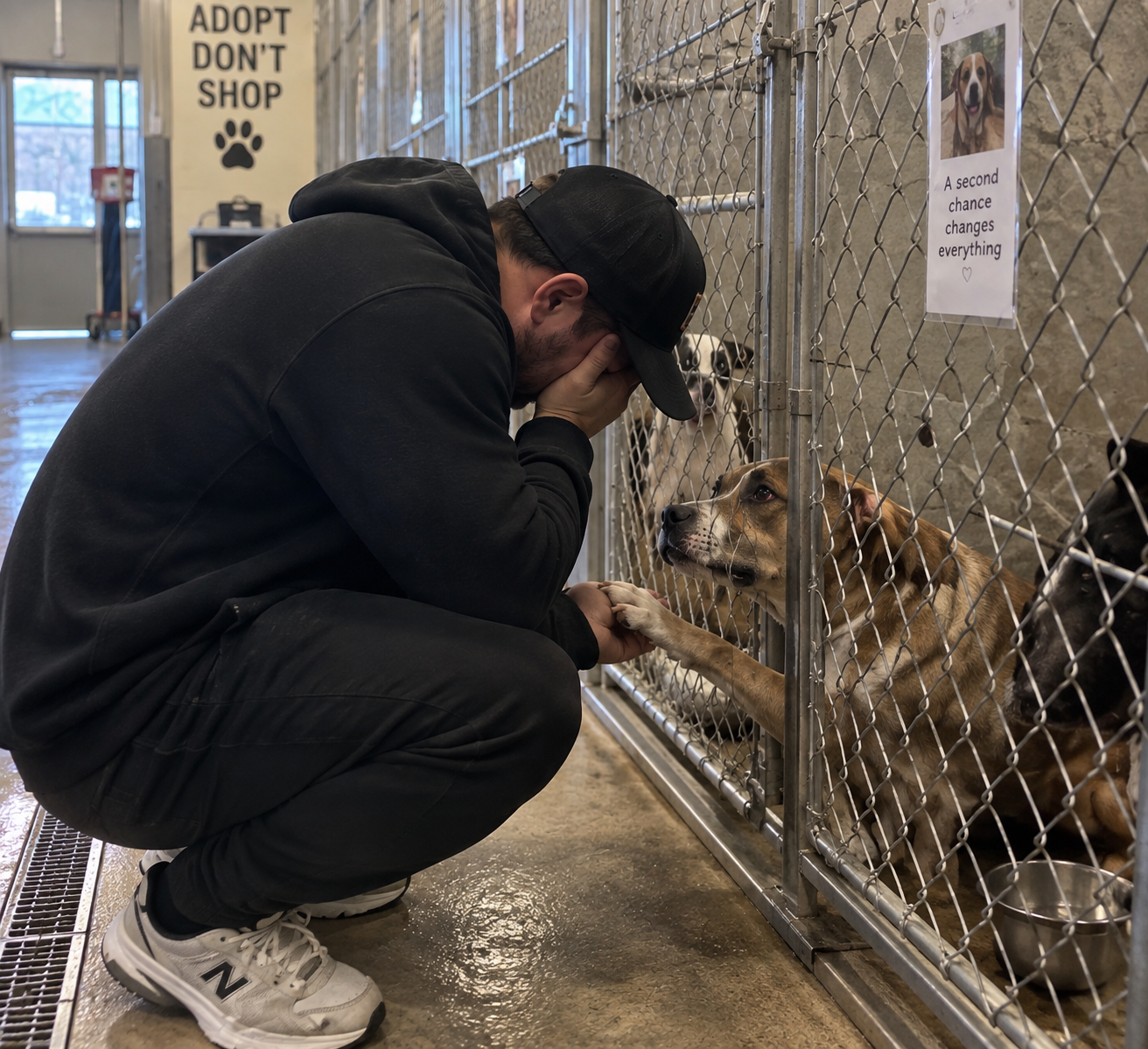
They Thought I Was There For Them
I've loved animals for as long as I can remember. Dogs especially.
I've had them throughout my life, and anyone who has ever truly loved a dog knows they're never just a pet. They become part of your routine, your family, your memories. They know when you're happy. They know when something is wrong. They wait for you to come home like you've been gone for a year when you've only been out for twenty minutes.
For years, I kept telling myself I wanted to do more for animals. I didn't know exactly what that meant. I wasn't starting a rescue. I couldn't adopt every dog that needed a home. But I figured I could at least help somehow.
One day in San Diego, I decided I was going to do something simple.
I went to Walmart and started filling my cart.
Dog food. Treats. Blankets. Little dog clothes. Anything I saw that I thought a shelter might be able to use.
Then I filled another cart.
I wasn't thinking about anything profound while I was shopping. I was actually excited. I remember looking at everything packed into my car afterward and feeling good about myself. Not in an arrogant way. I was just happy that instead of saying, One day I should help, I was finally doing something.
I drove to the shelter feeling great.
That feeling lasted until I walked through the door.
I wasn't prepared for what I saw.
There were dogs behind kennel doors everywhere I looked. Big ones. Little ones. Young ones. Old ones.
Some were barking and jumping when people walked past. Others just sat there quietly.
And then there were the ones that simply stared at you.
That's what got me.
I would walk past a kennel and this dog would stand up and come toward the door. For a few seconds, I couldn't stop myself from imagining what was going through its head.
"Is this person here for me?"
Then I'd keep walking.
And the dog would watch me leave.
I made it through a few rows before I couldn't handle it anymore.
I just stood there and started crying.
Not a couple of tears that you quickly wipe away so nobody notices. I mean really crying.
An older woman who worked there saw me and came over. She tried to comfort me and thanked me for bringing all the supplies.
She told me how much donations helped them because shelters depended on people contributing food and other things they constantly needed.
I wanted to answer her normally.
I couldn't.
I went back outside to start unloading my car, still crying.
I put bags of food onto the cart. Crying.
Blankets. Crying.
Treats. Crying.
I pushed the cart back inside. Still crying.
At some point I probably looked ridiculous, but I didn't care.
What had started as one of the happiest things I'd done in a while had become one of the heaviest experiences of my life.
I kept looking at those dogs and wondering how some of them had ended up there.
Maybe someone's circumstances genuinely became impossible. I understand that life can go terribly wrong, and I know not every animal in a shelter got there because someone simply stopped caring.
But I also knew that some of them had.
Somebody once picked that dog.
Maybe they brought it home as a puppy. Took pictures with it. Bought it toys. Gave it a name. Let it sleep beside them. That dog learned the sound of their car pulling into the driveway. It learned their footsteps. It trusted them.
And then one day that person left it somewhere and didn't come back.
The dog doesn't understand mortgages, relationships, moving, inconvenience or whatever explanation a human being has.
It just knows that the person it loved disappeared.
That thought destroyed me.
I remember looking at one dog in particular. I don't even remember what breed he was anymore. I just remember his eyes.
He wasn't barking.
He was sitting toward the front of his kennel looking through the door at me.
I wanted to open every cage.
I wanted to somehow tell all of them, You didn't do anything wrong.
But obviously I couldn't.
I eventually finished unloading everything. The woman thanked me again, and I told her I wished I could do more.
She said something very simple. She told me that what I'd brought "was" doing something. The food would be eaten. The blankets would be used. The treats would make some of their days a little better.
That helped.
But when I got back into my car, I didn't start it immediately.
I sat there for a while.
The car was empty now. A few hours earlier, I'd looked at the back filled with bags and blankets and felt proud and excited.
Now I just felt helpless.
I realized something that day that I've never forgotten.
Helping animals isn't only about being the person who adopts twenty dogs or donates thousands of dollars. Most of us can't do that.
Sometimes it's one bag of food.
One blanket.
A few hours volunteering.
Sharing a shelter dog's picture.
Paying an adoption fee for somebody else.
Fostering one animal until a permanent home can be found.
Or simply choosing to adopt instead of overlooking the animals already waiting for someone.
But there's something else I wish people would understand before they ever bring an animal home.
"Please understand what you're promising."
A dog isn't a Christmas present that becomes inconvenient in March. It isn't something you keep while it's small and cute and surrender when it gets older, sick, expensive or difficult.
You're becoming that animal's world.
You have friends, work, restaurants, vacations, phones and a thousand other things competing for your attention.
Your dog has you.
They know your smell. They recognize your voice. They know when you're supposed to come home. They remember where you sit. They wait at doors for you.
And they don't understand why one day you might decide they're no longer convenient.
If circumstances truly make keeping an animal impossible, do everything you can to find that animal a safe, loving home. Ask family. Ask friends. Contact reputable rescues. Fight for them the way they would fight to stay beside you.
And if you're thinking about getting a pet, ask yourself one question first:
"Am I willing to still love this animal when loving it becomes difficult?"
When it's old.
When the veterinarian bills come.
When you move.
When it ruins something.
When life changes.
Because that's when the promise actually matters.
I went to that shelter in San Diego thinking I was bringing dog food and blankets.
I left realizing that what those animals needed more than anything wasn't sitting in the back of my car.
They needed people who wouldn't leave.
So if you're reading this, please do something for them when you can. Donate. Volunteer. Foster. Adopt. Tell someone else to do the same.
But most importantly, if an animal already trusts you enough to call your home its home, remember what that means.
"You may have many chapters in your life."
To them, you are the whole story...................

Two Feet From Victory
I shit my pants at the Wynn in Las Vegas.
There. I said it.
I wish there were a more dignified way to begin this story, but there isn't. I was a grown man, staying at one of the nicest hotels in Las Vegas, and somehow my afternoon ended with me standing in a bathroom staring at my underwear and questioning every decision I had made that day.
It started with lunch.
I had eaten at one of the restaurants inside the Wynn and completely overdid it. I was in Vegas, I was hungry, and apparently I had decided portion control was something I would deal with when I got home.
I ate everything.
Appetizers. Main course. Sides. Dessert.
By the time I finished, I was so full that I should have just stayed at the table and accepted my fate.
Instead, I started walking back toward my room.
A few minutes into the walk, my stomach sent me a message.
"Bathroom."
Nothing serious yet. Just a notification.
I knew there were bathrooms around the casino, but my room was maybe ten minutes away. And for reasons I still don't understand, I decided I'd rather use my own bathroom.
Ten minutes.
I'm a grown man.
I've been controlling my bowels successfully for decades.
What could possibly go wrong?
So I kept walking.
About three minutes later, my stomach sent another message.
This one wasn't a notification.
This was a final warning.
I started walking faster.
You know that moment when needing to use the bathroom suddenly goes from being something you're casually aware of to becoming the single most important issue in your entire life?
I had reached that point.
The casino disappeared.
The people disappeared.
Las Vegas disappeared.
There was only me, my hotel room, and an increasingly hostile situation happening inside my body.
By the time I got near the elevators, I knew I had made a catastrophic mistake.
I wasn't walking normally anymore.
I was doing that very specific walk every human being instinctively knows how to do when disaster is imminent. Short steps. Legs slightly squeezed together. Butt clenched with a level of concentration normally reserved for bomb disposal.
I pressed the elevator button.
And waited.
Those were the longest eight seconds of my life.
The doors opened.
Nobody inside.
At two o'clock in the afternoon.
At the Wynn.
In Las Vegas.
I don't know what I did in a previous life to deserve that elevator, but somebody upstairs was looking out for me.
I stepped inside and immediately started pressing the button for my floor like hitting it seventeen times would somehow make the elevator move faster.
The doors closed.
I was alone.
Thank God.
Because halfway up, things became critical.
I grabbed the railing.
My legs were crossed.
I was breathing through my nose.
At one point I actually whispered, "Come on, man."
I don't know whether I was talking to the elevator, my stomach, or my own ass.
Probably all three.
Then I realized something terrifying.
If this elevator stopped on another floor, I was finished.
Every number that lit up above the door felt like Russian roulette.
Please don't stop.
Please don't stop.
Please don't stop.
Ding.
My floor.
I could have kissed the carpet.
The doors opened and I shuffled into the hallway like a man recovering from major surgery.
My room was down the hall.
Maybe fifty yards.
Under normal circumstances, nothing.
That afternoon, it looked like the final stretch of the Boston Marathon.
I couldn't run because running would have broken the seal.
So I developed this bizarre speed-walk where my upper body was moving forward while my legs were desperately trying to remain attached to each other.
Then I saw my door.
I've never been happier to see a hotel-room door in my life.
I pulled out my key card.
Red light.
"No."
Tried again.
Red.
At this point I was bargaining with God.
"I will be a better person."
Third attempt.
Green.
I threw the door open, slammed it behind me, and made my way toward the bathroom with whatever dignity I had left.
I had done it.
Against all odds, I had made it.
Elevator: conquered.
Hallway: conquered.
Hotel door: conquered.
The toilet was right there.
Victory.
I pulled my pants down.
And apparently my body interpreted that action as official permission to end the mission.
Game over.
I shit in my underwear approximately two feet from the toilet.
Two.
Feet.
I just stood there for a few seconds staring down at what had happened.
Then I sat on the toilet.
And started laughing.
Not chuckling.
Laughing.
The kind where you can't breathe.
I had just spent ten minutes performing an Olympic-level exercise in bowel control through one of the busiest hotels in Las Vegas. I had survived the casino. I had received the miracle of an empty elevator. Nobody stopped it on another floor. My key card finally worked.
I had beaten every obstacle.
And then lost the war two feet from the finish line.
I sat there laughing for probably five minutes because there was nothing else to do.
Eventually I cleaned myself up, threw the underwear directly into the trash, tied the bag shut, and stood in the shower thinking about how differently the afternoon could have gone.
If one person had gotten into that elevator?
Game over.
If somebody had pressed the button on another floor?
Game over.
If my key card had failed one more time?
There would probably be a hallway at the Wynn that employees still refer to as "the incident."
That afternoon taught me something I have carried with me ever since.
When your body politely tells you it needs a bathroom, don't negotiate.
Don't calculate walking distance.
Don't tell yourself you're only ten minutes away.
And definitely don't assume you're still in charge.
Because sometimes your ass isn't asking for permission.
It's giving you a deadline.
Stories organized by what haunts us
Each category holds a different kind of truth. Browse by the weight that sits heaviest on your heart, or discover stories that mirror your own silence.
Regret
The choices we replay in the dark hours, wondering if we could have chosen differently.
Loss
The people and moments we've lost, and the grief we carry without speaking its name.
Secrets
The truths we've kept locked away, too dangerous or too fragile to share with anyone.
Longing
The desires and dreams we've abandoned, and the lives we imagine in quiet moments.
Your story stays yours, always
Share safely without names, tracking, or judgment. Every confession is encrypted and held in absolute confidence. What you tell us remains between you and the silence.
No names attached to stories
No data collection or tracking
No judgment, only understanding

Stay in the loop
New stories arrive quietly in your inbox each week, unannounced and honest.
FAQ
Questions about how I Never Told Anyone works and what happens to your story.
Yes. We collect no identifying information, no IP addresses, and no metadata. Your story exists without a name attached. Once submitted, it becomes part of the archive, separate from any trace of who wrote it.
Stories are permanent once published. This is intentional—your truth becomes part of the collective archive. If you have concerns about a specific submission, contact us directly and we'll review your request.
We select stories that resonate deeply, that capture something true about the human experience. There's no algorithm, no ranking system. Some stories are featured, others remain in the quiet archive, equally valuable.
We publish stories about regret, loss, secrets, and longing—the full spectrum of what haunts us. We do moderate for safety, but we don't judge the darkness. If your story is honest, it belongs here.
People like you. People carrying their own weight. People searching for proof that they're not alone in what they've never said aloud. This is a space for witnesses and the witnessed.
Your story matters here
Whether you've been carrying this for years or it just surfaced, there's a place for it. Share what you've never told anyone.