
My Favorite Stop
I've been delivering packages for almost nine years, and after a while, you stop seeing addresses as houses.
They're just numbers.
You learn which streets have nowhere to park, which apartment buildings require a code nobody ever remembers to put in the delivery instructions, and which houses have dogs that sound like they're going to come through the front door.
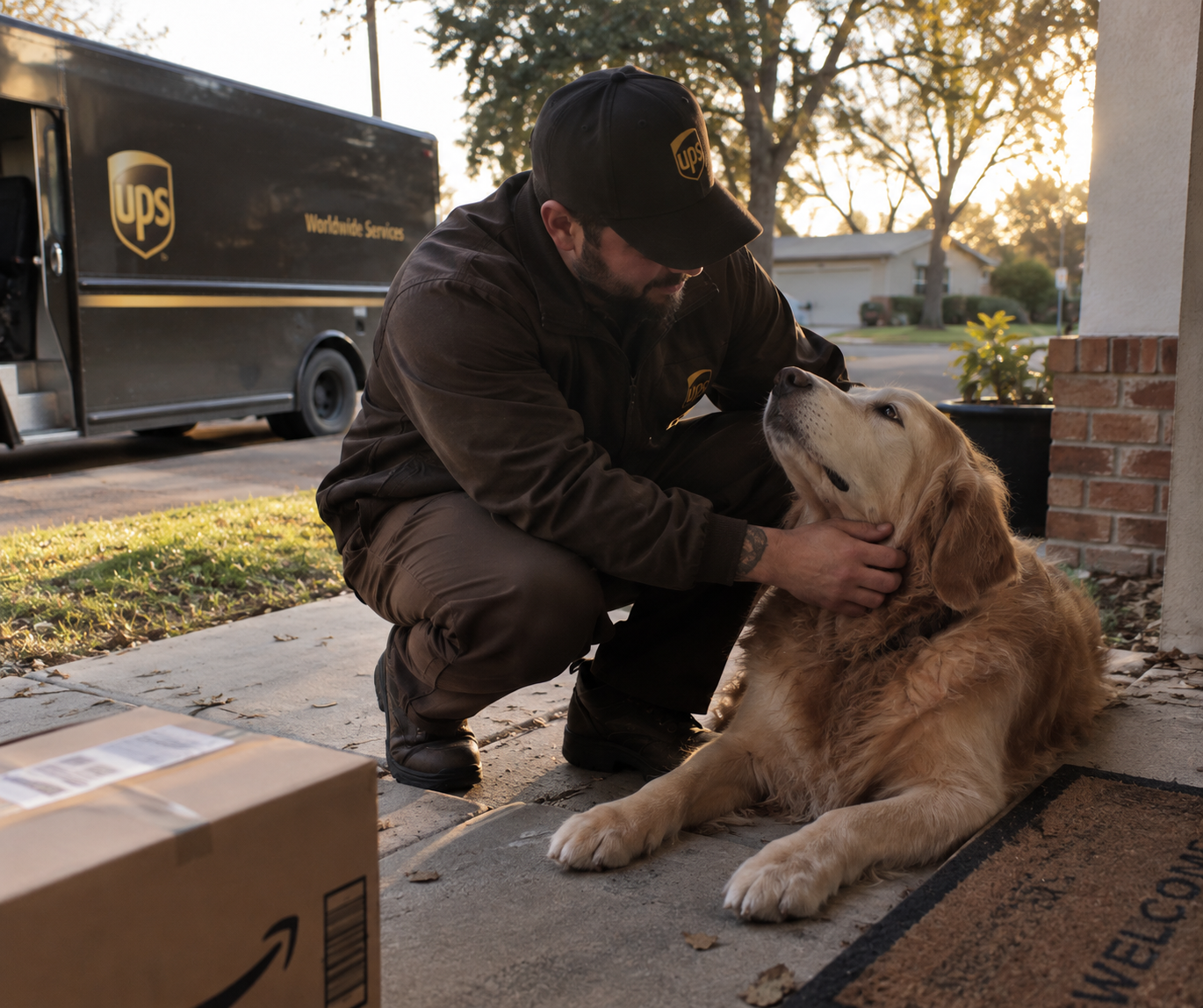
In the summer of 2022, I was working a route in Sacramento, California. One of my regular stops was a small beige house on a quiet street not far from Arden-Arcade.
The address was 417.
I don't remember the first package I delivered there, but I remember the dog.
He was an old golden retriever named Charlie.
The first few times I came, Charlie would be lying near the front door. As soon as he heard the truck, he'd slowly get up and walk toward me.
And I mean slowly.
His face had gone almost completely white, his back legs weren't great, and he had that stiff walk older dogs get where every step looks like it requires a little planning.
But his tail worked perfectly.
The owner was a woman named Linda, probably in her late sixties. One afternoon she opened the door while I was scratching Charlie behind the ears.
"He waits for you now," she said.
I laughed. "He waits for the packages?"
"No. You."
I thought she was joking.
After that, I started noticing him before I noticed the house.
Some days he'd be lying in the shade near the porch. Other days I'd see his head through the front window. If Linda had the door open, Charlie would hear my truck before I even stopped.
Eventually I started keeping dog treats in the truck.
Technically, they weren't just for Charlie. There were plenty of dogs on my route. But somehow the bag always seemed to end up in my pocket before I got to 417.
I started talking to him too.
"What's up, old man?"
"Still here?"
"You guarding the place today?"
Normal stupid things you say to a dog when nobody is around.
For almost two years, Charlie was part of my route.
I knew almost nothing about Linda. We probably never talked for more than two or three minutes at a time. But I knew Charlie had been her husband's dog originally. Her husband had died several years earlier, and Charlie had been with her ever since.
"He got me through it," she told me once.
That was all she said.
I understood what she meant.
Toward the end of 2023, Charlie started having more trouble getting to the door. Sometimes he'd just lift his head when I came.
So instead of making him walk to me, I'd bring the package over and sit beside him for a minute.
I'd give him his treat, scratch his neck and go back to work.
I had over a hundred stops some days. Everything about the job is built around moving quickly.
But I always gave Charlie his minute.
Then one Tuesday in February, I pulled up to 417 and he wasn't there.
I didn't think much of it.
The next delivery, he wasn't there either.
A week later, I had another package.
Still no Charlie.
Linda opened the door.
I already knew.
You know that feeling when somebody hasn't said anything yet, but you can tell from their face what they're about to tell you?
She looked at the treat in my hand.
"He went Saturday."
I didn't know what to say.
I asked if he had been sick.
She said he'd stopped eating a few days earlier. The vet told her it was probably time. She had someone come to the house so he wouldn't have to spend his last hours frightened in a clinic.
Then she said, "He had a good morning."
For some reason, that sentence got me.
Not right there. I handed her the package, told her I was sorry and went back to my truck.
I made it maybe three houses down before I had to pull over.
I sat there holding the steering wheel, crying over a dog that wasn't mine.
I felt stupid.
I'd delivered to that house for almost two years, but if you added up all the time I'd actually spent with Charlie, maybe it was a few hours total.
But that's the strange thing about animals. They don't need much time to become part of your routine.
Charlie didn't know my name.
He didn't know what I did when I wasn't wearing that uniform.
He didn't know if I was having a good day or a terrible one.
He just knew the sound of my truck.
And apparently that was enough.
A couple of weeks later, I had another delivery for Linda.
When she opened the door, she handed me a small plastic bag.
Inside was the half-empty bag of dog treats I'd left with her months earlier.
"I can't throw these away," she said. "Maybe you can give them to the other dogs."
I took them.
I still remember looking at that stupid bag of treats sitting in the passenger seat for the rest of my shift.
I couldn't open it.
Eventually I did. There was a German shepherd a few streets over who became the first recipient.
Life went on.
That's what routes do.
People move. Houses get sold. Kids grow up. Cars in driveways change. Dogs disappear.
A few months later, Linda moved too. The house at 417 was sold to a young couple.
They painted it white.
Now when I deliver there, there's sometimes a stroller on the porch.
No dog.
I don't know why I'm writing this except that I've been thinking about Charlie lately.
I think we underestimate how many small relationships make up a life. Not best friends. Not family. Just familiar faces. The cashier who knows your order. The neighbor who waves every morning. The old man you see walking the same street. The dog who recognizes the sound of your truck.
You don't realize they've become part of your world until one day they're not there.
If you are out and there's an old dog sleeping somewhere near you, give him an extra minute today.
Put your phone down.
Scratch behind his ears.
Let him take too long on the walk.
Because eventually you'll have plenty of time to get where you're going.
He won't.
We Should Have Gotten One Wrong
I was in ninth grade when a few of my friends and I came up with what we genuinely believed was a brilliant plan.
We were going to steal the final exam.
This was back when I was growing up in India. None of us were particularly gifted students. Actually, that's being generous.
The passing grade was 34 out of 100.
Most of us had perfected the art of getting somewhere around 34.
Not 60. Not 50.
Thirty-four.
We weren't trying to excel. We were trying to survive.
Then one of us had an idea.
Instead of studying for the final exams, why not just steal them?
To a group of ninth-grade boys, this apparently sounded easier than opening our textbooks.
The exams were kept inside a vault at school, so we started planning. And when I say planning, I mean we took this very seriously.
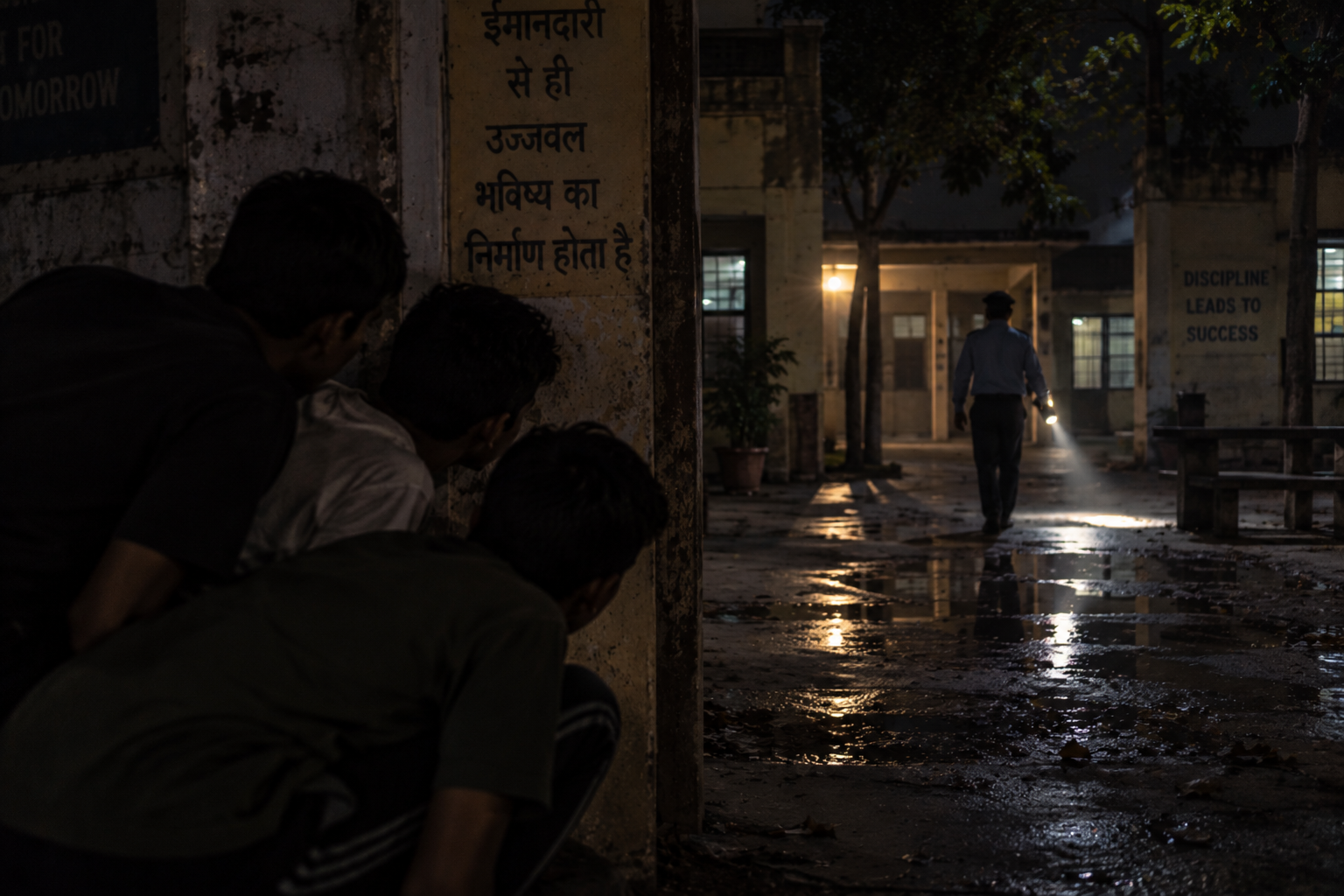
Every evening we'd stay late playing on the school playground while secretly watching the school guard.
He was an older man who lived on the property and liked to drink. We figured out when he ate, when he went back to his quarters and when the school grounds were usually empty.
We knew his routine better than we knew our schoolwork. Eventually, we somehow managed to get hold of his keys long enough to make copies of the ones we thought we'd need. Looking back, the amount of effort we put into avoiding studying was incredible.
Finally, the night came.
Around midnight, we met near the school.
We climbed over the wall and dropped onto the property.
So far, everything was going exactly according to plan.
There was just one small detail our criminal mastermind committee had forgotten.
The guard had a dog.
The moment we reached the main corridor, the dog started going crazy.
Barking. Loudly.
Immediately, a flashlight appeared in the distance.
The guard was awake.
We ran behind a wall and squeezed ourselves together, trying not to make a sound.
I remember standing there thinking that my life was over.
Forget the exam. Forget passing ninth grade. I was going to die behind this wall.
The guard walked around shining his flashlight into the darkness.
Somehow, he didn't see us.
Eventually, he went back to his quarters.
We waited.
Then we actually continued with the plan.
And unbelievably...
"It worked."
We got the exam.
We escaped.
Nobody caught us.
For a brief moment, we were legends.
There was only one problem.
We were idiots.
When exam day came, every one of us knew every answer.
So naturally, every one of us answered every question correctly.
We all got:
100 out of 100.
This might have been believable if we had been good students.
We weren't.
These teachers had been watching us struggle to get 34 for years.
Imagine being a teacher and suddenly the same group of boys who could barely pass your class all become geniuses at exactly the same time. Not 70. Not 82. Not even 95.
One hundred.
All of us.
Apparently, not one person in our group had the intelligence to say, "Guys, maybe we should get a few wrong."
The teachers immediately knew something was wrong.
An investigation started. It didn't take long. We got caught.
They threw out our exam results and made us take the exams again.
This time, unfortunately, we didn't have the answers.
We failed.
I don't remember exactly what punishment each of us received afterward.
What I remember clearly is that evening. We all got together.
Someone finally said what none of us had thought of before.
"We should have gotten one wrong."
That was it.
We completely lost it.
We laughed until we couldn't breathe.
Months of planning. Watching the guard. Getting his keys. Making copies. Climbing the school wall at midnight. Nearly getting caught because of the dog. Hiding from a flashlight. Getting into the vault. Stealing the exam. Getting back out.
We had successfully completed every difficult part of the plan.
And then we got caught because none of us was smart enough to get a question wrong.
I'm 43 now.
I haven't spoken to some of those boys in years. Life took all of us in different directions.
But every once in a while, I think about that night.
And I can still see a bunch of terrified ninth graders pressed against a wall in the dark while an old man walked around with a flashlight and his dog barked somewhere nearby.
At fourteen, we thought we had pulled off the greatest exam heist in history.
Turns out we were exactly as smart as our grades suggested.
Definitely Not Me
There is a unique kind of mid-flight panic that science has yet to fully classify, and I experienced the absolute peak of it somewhere over the Rocky Mountains on a packed flight from Chicago to Denver.
It was about two hours into the flight. I was crammed into 22B—the dreaded middle seat—sandwiched between a guy who looked like a competitive powerlifter on my left, and a very prim, impeccably dressed woman reading a hardcover biography on my right.
Now, I had made a critical, life-altering mistake at the airport terminal during our two-hour layover. I had consumed a massive bowl of spicy black-bean chili paired with a large draft beer. At sea level, my digestive tract is a finely tuned machine. At 35,000 feet, cabin pressure does things to the human body that violate the Geneva Convention.
About midway through the flight, my stomach let out a low, ominous rumble that felt like a tectonic shift.
I immediately went into lockdown mode.
I crossed my legs.
I clenched every muscle in my lower body.
I tried to distract myself by scrolling through the in-flight movie selection, but I knew I was living on borrowed time.
I kept praying for the "Fasten Seatbelt" sign to turn off so I could make a frantic break for the lavatory, but we were hitting light turbulence and the captain was keeping everyone locked down.
Then came the moment of betrayal.
I sneezed.
The sudden, violent contraction of my diaphragm overrode my defenses. It wasn't a loud noise—thankfully, the engine hum masked the acoustics—but it was a slip. A silent, heavy, catastrophic thermal event had been unleashed into the cabin air.
Within roughly four seconds, I knew I had created a monster. The sheer potency of what I had just done was staggering. It wasn't just an odor; it was an environmental hazard. It felt like it had its own weather system.
Panic, pure and primal, set in. I knew that if the people around me realized I was the source, I would have to legally change my name and move to a different continent. I needed a strategy, and I needed it immediately.
I went on the offensive.
I suddenly stopped looking at my screen, narrowed my eyes, and did a sharp, theatrical sniff. I flared my nostrils, looked disgusted, and immediately turned my head to the left to stare directly at the powerlifter.
I didn't just look at him; I gave him the "disappointed disappointed-father" look.
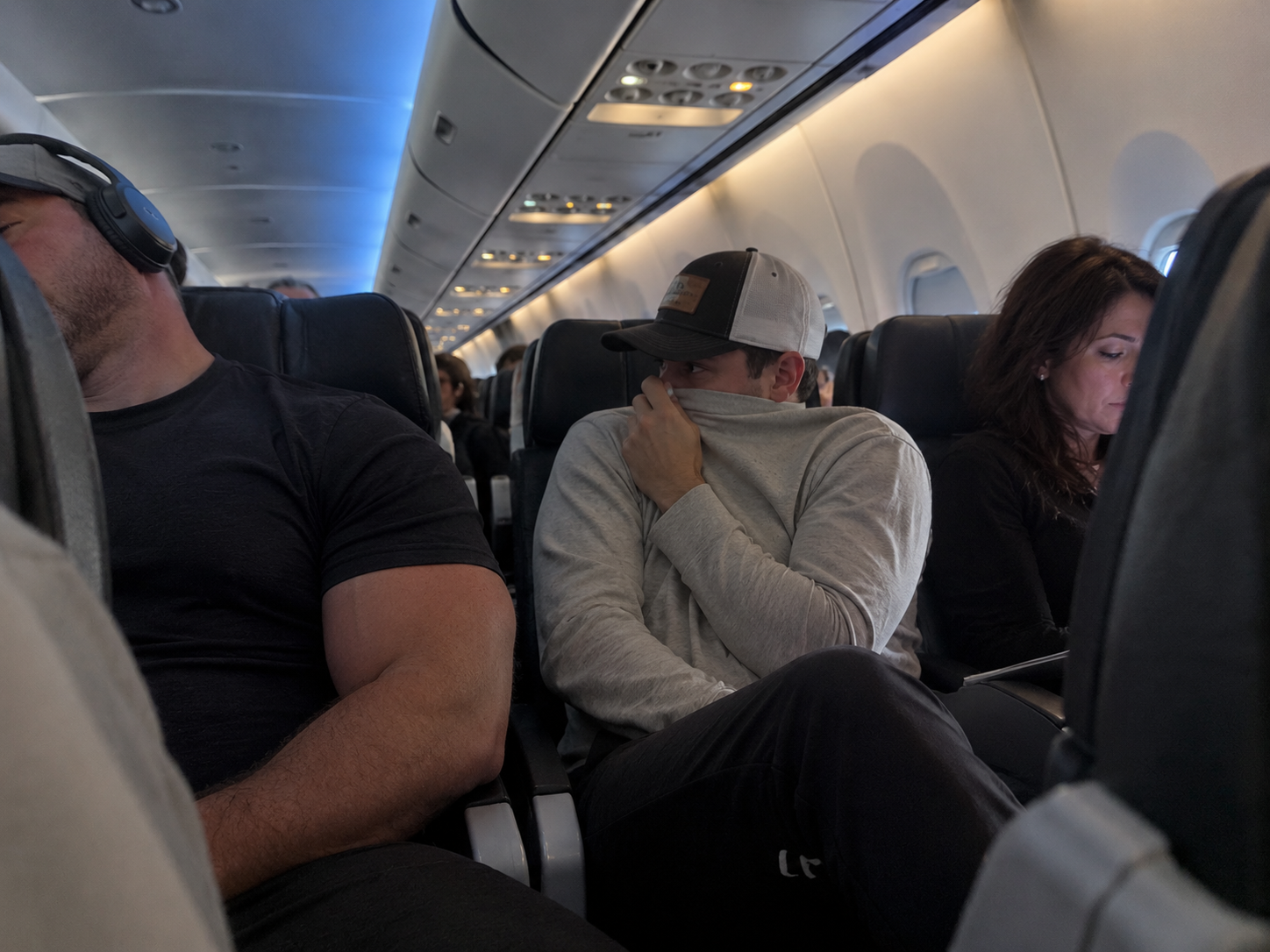
I pulled the collar of my shirt up over my nose, winced, and shifted my weight as far away from him as humanly possible, right into the personal space of the woman on my right.
The powerlifter, who had been peacefully dozing with a neck pillow, felt my intense, burning gaze. He opened his eyes, blinked groverly, and looked at me. I kept my shirt over my nose and gave a subtle, accusatory shake of my head.
"Dude," I whispered under my breath, just loud enough for him to hear over the engines.
He looked genuinely confused, then his nose caught the wave. His eyes went wide. But instead of taking the blame, he immediately looked across the aisle at a guy in row 21 who was peacefully eating a ham sandwich. The powerlifter pointed a massive finger toward the sandwich guy and mouthed, “Not me."
Meanwhile, the classy woman to my right finally hit the wall of aroma. She let out a sharp, audible gasp, slammed her hardcover biography shut, and aggressively reached up to twist her overhead air vent to maximum blast, aiming the nozzle directly at the space between her and me.
Seeing an opportunity to solidify my innocence, I quickly reached up and did the exact same thing, aiming my air vent directly at the powerlifter like I was trying to blow the toxic cloud back to his side of the aircraft.
"Some people have no respect for public spaces," I muttered loudly to the woman, shaking my head in absolute disgust.
She looked at me, her eyes watering slightly from the air current and the fumes, and nodded in frantic agreement.
"It’s completely unacceptable," she whispered back, glaring daggers at the back of the head of the guy eating the ham sandwich in front of us, who was entirely oblivious to the fact that he was currently the prime suspect in an aviation crime.
For the remaining forty minutes of the flight, the entire radius of rows 21 through 24 descended into a silent state of psychological warfare. Everyone was sniffing the air, glaring at everyone else, and adjusting their ventilation nozzles like anti-aircraft guns.
I sat right in the eye of the storm, looking the most offended of all, occasionally letting out heavy, dramatic sighs of suffering.
When the plane finally touched down and the doors opened, I scrambled out of that middle seat, grabbed my carry-on, and practically sprinted down the jetway. I have never felt a greater combination of intense shame and absolute, criminal triumph in my entire life.
When The Money Left, So Did They
I used to be the guy who answered the phone. It didn't matter what time it was or what I was doing. If one of my friends called and needed something, I answered. Need a ride from the airport at midnight? Send me your flight number. Car broke down? Send me your location. Short on rent? How much? Going through a divorce and need somewhere to sleep? My couch is yours. Need someone to sit with you at a hospital? I'll be there.
For years, I genuinely believed that's what friendship was. I had a group of guys I'd known for a long time, some since my twenties. We didn't even really call each other friends anymore. We called each other brothers. Our wives and girlfriends knew each other. We celebrated birthdays together. We traveled together. There were group chats that never stopped, Friday dinners, Sunday football, Vegas trips, weddings and baby showers. At one point, I think I knew more about some of these guys than I knew about members of my actual family.
For a long time, I was also doing very well financially. I had built a business from almost nothing. It took years, but eventually it became successful enough that money stopped being something I thought about every day. I had a nice house, nice cars, and I picked up dinner checks without thinking twice. If we went somewhere and somebody couldn't afford it, I covered them.
I never kept score. That's important. I don't want this to sound like I was secretly keeping track of everything I'd ever done for people and waiting for repayment. I wasn't. If I paid for dinner, I forgot about it. If I loaned someone money, half the time I didn't even ask for it back.
One friend needed several thousand dollars when his business was struggling. I gave it to him. Another went through a terrible divorce and practically lived at my house for a while. We'd sit in my backyard until one in the morning while he told me the same story about his marriage over and over again. I listened every time. There were people I helped get jobs and people I introduced to clients. One of the guys once called me from another state because his mother had been taken to the hospital and he couldn't get there until the next morning. I went and sat with her until almost 3 a.m. so she wouldn't be alone.
That's how seriously I took the word "brother".
Then my business started having problems. At first, nobody knew because I was convinced I could fix it. We lost a major client, then another. I had employees, leases, debt, vendors, payroll and obligations that didn't disappear just because the revenue did. I started putting my own money back into the company to keep it alive. Then I put in more. I sold one of my cars. I emptied an investment account. I borrowed against things I never thought I'd borrow against.
For almost a year, every morning I woke up thinking, "Just get through this month."
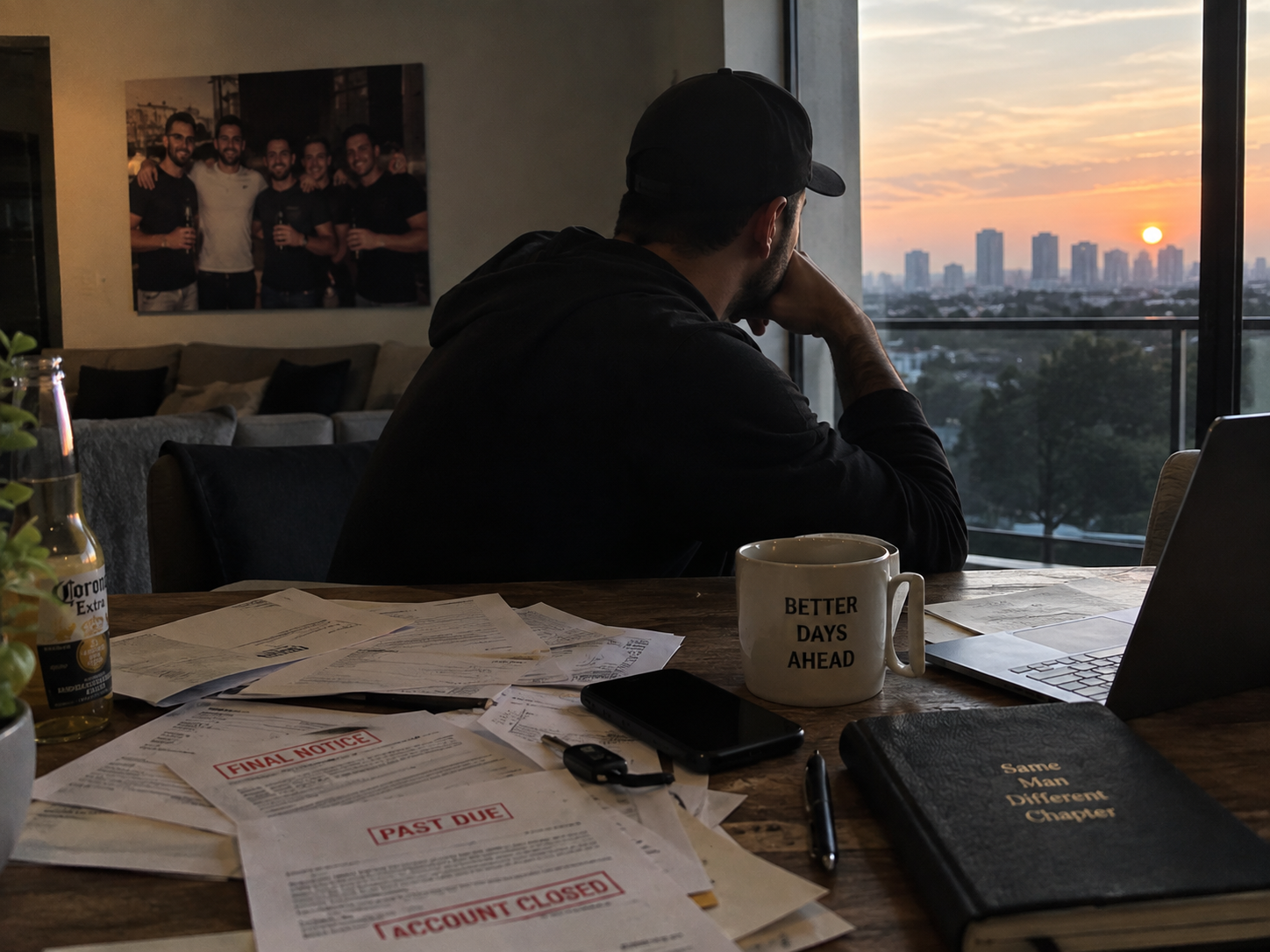
Eventually, there was nothing left to throw at it. The business failed, and when it went, it took almost everything I'd built with it. I went from being the guy everyone thought had everything figured out to sitting alone at my kitchen table at two in the morning with my laptop open, trying to decide which bills I could postpone without making things worse.
I was embarrassed. That was probably my first mistake. I didn't tell people how bad things were until they were really bad. But eventually my friends knew. Everybody knew.
And that's when something happened that I still have trouble explaining without sounding bitter.
The phone stopped ringing.
Not immediately. It happened gradually. The group chat was still active. People were still sending jokes, talking about restaurants and planning weekends. But somehow, I wasn't really part of those conversations anymore.
At first, I assumed it was me. I wasn't exactly fun to be around. I was stressed, distracted and quieter than usual. So I started reaching out. One guy I'd considered one of my closest friends told me, "Brother, I've just been crazy busy." Another said his kids were taking up all his time. Another had problems at work. Another was traveling. Another said, "We definitely need to get together soon."
Soon never came.
There was always a reason, and individually every reason sounded completely reasonable. It was only when I put them all together that I realized what was happening.
Nobody had time for me anymore.
The strange thing was, I wasn't asking anyone for money. I wasn't asking them to save my business. I wasn't asking to move into their houses. I didn't need somebody to solve my life.
I wanted someone to call.
That's it.
Call me and say, "How are you doing?" Come over with two coffees. Sit with me for an hour. Tell me I'm going to figure it out. Distract me. Make me laugh. Do for me what I had done for them when their lives were falling apart.
One night, I was scrolling through old photos on my phone. There we all were. Restaurants, birthdays, boats, Vegas, my backyard. Everyone smiling with their arms around each other's shoulders.
Brothers.
I started thinking about how many times I'd dropped whatever I was doing because one of those people needed me. Then I looked at my recent calls.
Almost nothing.
That hurt more than losing the money.
Money can come back. Businesses can be rebuilt. But once you see a relationship differently, it's very difficult to unsee it.
There was one friend in particular who bothered me the most. I'd helped him through one of the worst periods of his life. When he couldn't make rent years earlier, I covered it. When his relationship ended, I was the person he called every night.
When my business collapsed, I barely heard from him.
Eventually, I called him. We talked for maybe five minutes. He told me, "You know I love you, brother. I've just got a lot going on."
I remember hanging up and staring at his name on my phone. The word brother suddenly sounded ridiculous. A few months earlier, if he had called me at two in the morning and told me he needed me, I would have gotten dressed and driven over. Now I couldn't get five minutes without feeling like I was inconveniencing him.
That was probably the moment something changed in me.
I stopped calling people. Not as a test. Not because I wanted them to chase me. I was just tired. And once I stopped making the effort, most of those relationships disappeared completely.
That told me everything I needed to know.
There were days during that period when I was genuinely scared. I'd wake up at four in the morning with my heart racing, thinking about money. I'd sit in my car for twenty minutes before going inside because I didn't want anyone to see how overwhelmed I was.
Slowly, I learned how to deal with it myself. I learned to make uncomfortable phone calls. I learned to say, "I can't afford that right now." I learned that losing money didn't make me less of a man. I learned how many things I'd bought because I wanted other people to think I was successful, and I learned how little any of that mattered once everything disappeared.
But the hardest lesson was about people.
I used to think loyalty was proven during the good years. It isn't. Everybody loves you at the dinner table when you're laughing, paying the bill and talking about the next trip. You learn much more about a relationship when you have nothing exciting to offer. No connections. No expensive dinners. No business opportunities. No house everyone wants to hang out at. No version of yourself that makes other people feel like they're winning just by being around you.
I don't believe every person is selfish. A few people actually surprised me in the opposite direction. People I wasn't even particularly close to checked on me more than some of the men I'd called brothers.
One former employee called me every couple of weeks. He never asked for anything. He'd just say, "You good?"
Sometimes that two-minute conversation meant more to me than he probably realized.
So I don't think the lesson is that nobody cares about anybody. The lesson for me was that I had been careless with words like "friend", "brother" and "family." I gave those titles away too easily.
I confused history with loyalty.
I confused having fun together with being there for each other.
I confused people enjoying my company with people actually caring about me.
I'm rebuilding now. Slowly. I'm nowhere near where I used to be financially, but for the first time in a long time, I can see a future again.
Some of the old friends have started reaching out more. Maybe they genuinely miss me. Maybe life has calmed down for them. Maybe they finally realized how absent they'd been. I don't know.
I'm polite. I'm not angry. I don't want revenge, and I don't need anyone to apologize.
But something is different.
When someone calls me "brother" now, the word doesn't automatically mean anything to me. I watch what people do.
Losing my business cost me almost everything I had. At the time, I thought it was the worst thing that had ever happened to me.
Now I'm not so sure.
Because when the money disappeared, a lot of people disappeared with it. And as painful as that was, at least now I know the difference between someone who enjoys standing beside you and someone who will still be standing there when there's nothing left to gain.
Dad Just Wanted To Watch The News
Growing up in India, my brother and I had a system.
Whenever our parents went out of town, there were certain things we knew we could get away with.
Stay up late. Eat whatever we wanted. Have friends over.
And occasionally, when we could get our hands on one, watch an adult movie we absolutely were not supposed to be watching.
My brother was much more committed to this activity than I was.
I'll leave it at that.
We were young, just getting to the age where girls had suddenly become interesting and none of us really knew anything about anything. Watching an adult movie felt like we were doing something incredibly dangerous.
There was no internet in our house. No smartphones. No private screens.
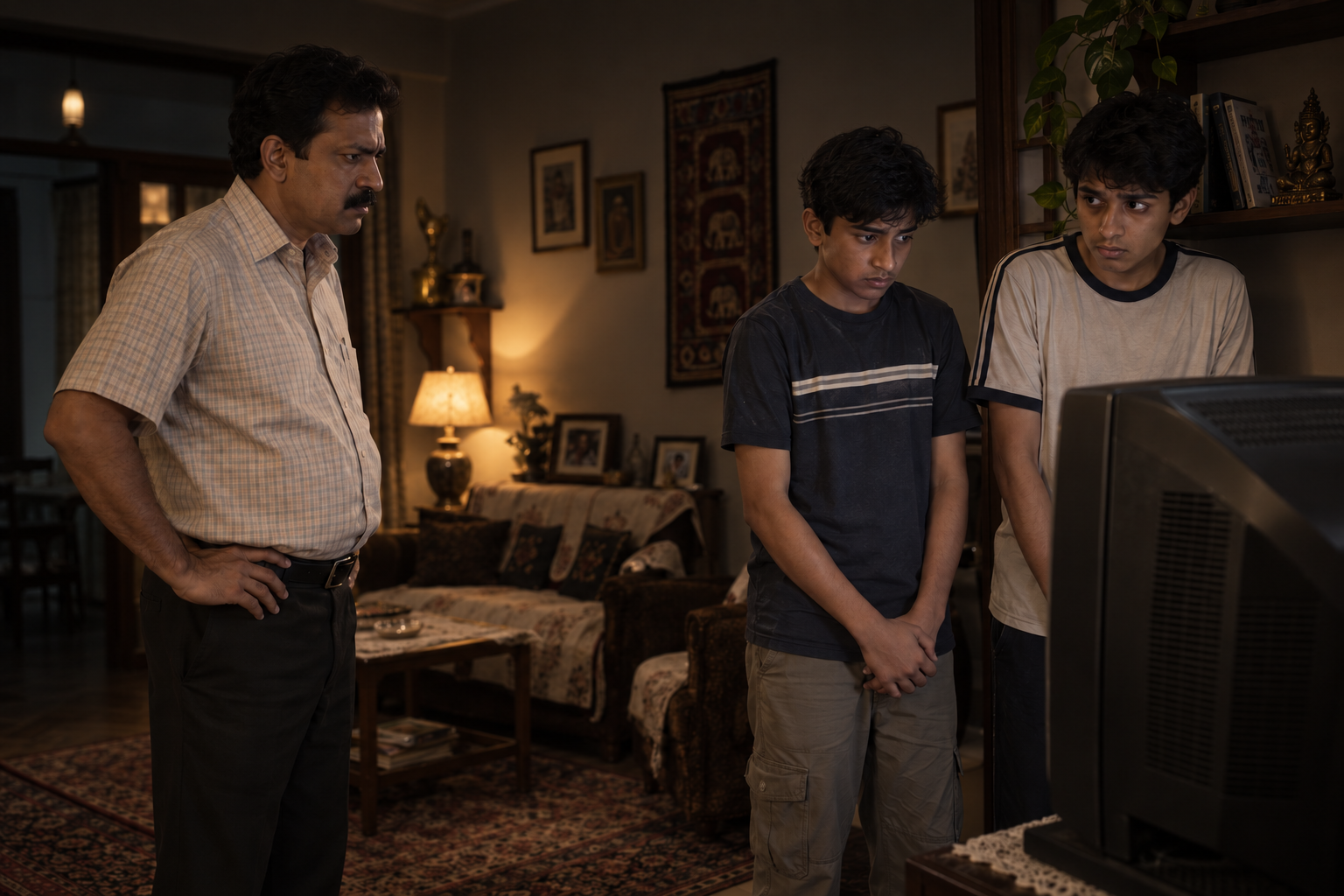
There was one television in the family room and a VCR.
So this required planning.
You needed the tape.
You needed the house empty.
You needed enough time.
And most importantly, when you were finished, you needed to remove the evidence.
That last part turned out to be important.
One time, our parents went out of town for two days. At some point while they were gone, my brother watched one of those adult movies. Then he forgot about it.
The tape stayed inside the VCR.
Our parents came home two days later, and somehow neither of us remembered it was still there.
My dad came home, took a shower, ate, and eventually settled into his normal routine.
He wanted to watch the news. My brother and I were somewhere nearby, completely relaxed. As far as we were concerned, we had gotten away with everything.
My dad picked up the remote.
Our VCR had this feature where if you pressed a certain button, it would switch over and automatically start playing whatever tape was inside.
I don't remember which button my father pressed.
I just remember the television changing.
And suddenly, the adult movie my brother had been watching two days earlier was playing right there on the family television.
Nobody moved.
My dad stared at the TV.
I looked at my brother.
My brother looked at me.
I don't think either of us had ever turned that pale before.
My father switched it off immediately.
Silence.
There are moments in childhood when nobody needs to explain what's about to happen. This was one of them.
My mother understood the situation almost immediately.
She looked at my father. She looked at us.
And then, very wisely, she got up and walked out of the room.
To this day, I respect that decision.
My father turned toward us. There was no point lying.
No investigation was necessary.
No blaming our friends.
No pretending we didn't know how the tape got there.
We knew.
He knew.
And he knew that we knew.
My brother and I received what I can comfortably describe as one of the greatest ass-whoopings of our childhood.
My father loved us more than he loved himself, but when it came time to reprimand us, he didn't hold back.
That evening, however, it wasn't funny.
The embarrassment was almost worse than the punishment.
I couldn't look at my father. I couldn't look at my brother. I definitely couldn't look at the television.
A few days later, we made the mistake of telling our friends what had happened.
For days, we laughed until our stomachs hurt.
Someone would pretend to pick up a remote and we'd lose it.
Someone would ask, "Did your dad get to watch the news?"
That was enough to start everyone laughing again.
And naturally, my brother tried to defend himself.
"It could've happened to anybody."
No. It couldn't. You had one job.
Take the tape out of the VCR.
I'm 45 now, and somehow that stupid little moment is still perfectly clear in my head.
My brother's face.
My mother's perfectly timed exit.
My father standing there with the remote.
And the instant realization that our lives were about to become very unpleasant.
As I've gotten older, I've come to appreciate my father in ways I couldn't when I was a kid. He loved us fiercely, but he also believed it was his responsibility to correct us when we crossed a line.
I didn't always appreciate that then. I do now.
Some childhood memories are important because they teach you something.
Some are important because they remind you how much your parents loved you.
And some survive for decades simply because they're too damn funny to forget.
Dad, I love you. Thank you for being the father you were to us.
And after all these years, I have only one thing left to say in my defense:
"It was my brother's tape."

I Thought Success Looked Like This
For most of my thirties, I was obsessed with looking successful.
I don't think I understood that about myself at the time. I would have told you I just liked nice things. Good clothes, good restaurants, nice cars, expensive watches. I worked hard, so why shouldn't I enjoy what I earned?
But the watch was different.
It was a Rolex Submariner. I bought it when I was 34 after the best year my business had ever had. I remember sitting in my car outside the dealer for ten minutes before going inside because even though I could afford it, spending that much money on a watch still felt insane.
I bought it anyway.
The first few weeks, I couldn't stop looking at my wrist. Not because I needed to know the time. Half the time I checked it, I didn't even register what time it was.
I liked what it said about me.
I grew up in a house where money was always discussed quietly. My parents weren't poor, but there was never much extra. I wore my older brother's clothes, we rarely ate out, and vacations meant driving somewhere we could come back from the same day. My father worked six days a week for most of my childhood.
So when my business finally started making real money, I think I became determined to prove that I had escaped that life.
The watch became part of that.
I'd wear it to meetings. Dinners. Weddings. Even places where wearing a $10,000-plus watch probably wasn't particularly smart.
I'd notice when people looked at it.
Sometimes another guy would recognize it and say, "Nice Sub."
I'd pretend it wasn't a big deal.
"Thanks, man."
But inside, I loved it.
It sounds embarrassing now, but I think I genuinely believed people respected me more when I wore it.
A few years later, I took a trip to San Diego with some friends. We rented a house near the beach for the weekend. Nothing crazy. Mostly eating, drinking, sitting outside and pretending we were still young enough to recover from staying up until two in the morning.
Saturday afternoon, we walked down to the beach.
I remember taking my watch off before going into the water.
I didn't want salt water or sand getting into it, which is funny considering what the watch was designed for. I wrapped it inside my T-shirt and put everything near our chairs.
We swam for maybe twenty minutes.
When I came back, the shirt was there.
The watch wasn't.
I thought one of my friends was messing with me.
"Okay, who has it?"
Nobody knew what I was talking about.
I emptied the beach bag. Checked underneath the towels. Shook out my shirt. Checked my shoes even though there was absolutely no reason the watch would be inside my shoes.
Nothing.
For the next hour, I completely lost my mind.
I walked up and down the sand staring at the ground. I asked strangers if they'd seen a watch. I went through the bags again. Then again.
My friends were helping me, but eventually one of them said, "Man, it's gone."
I got angry at him for saying it.
That night, everyone wanted to go to dinner. I didn't.
I sat at the house searching online for the serial number, insurance information, police reports, pawn shops, anything I could think of. I kept calculating what I'd paid for it and what it was worth now.
But underneath the money was something else.
I felt embarrassed.
I remember looking at my bare wrist at dinner the next day and actually feeling less successful.
That's the part I still remember.
Nobody had said anything. Nobody cared. These were my friends. They knew exactly who I was with or without the watch.
But somehow I felt like something had been taken from me beyond the object itself.
For the next few weeks, every time I got dressed, I'd look at my wrist. I considered immediately buying another one, even though replacing a stolen luxury watch was not exactly an emergency.
One afternoon, I was having lunch with my dad.
He knew I'd lost it and asked if I'd found it.
"No."
"That's too bad."
Then he kept eating.
That was it.
I laughed and said, "You know how much that thing cost?"
He looked at me and said, "I know. That's why I never understood why you wore that much money on your hand."
There wasn't some profound speech after that. My dad isn't that kind of person.
We started talking about something else.
But I thought about what he'd said for a long time.
This was a man who had worked six days a week for years, raised a family, paid his mortgage and somehow put his kids through school. I had never once seen him wear a watch worth more than a couple hundred dollars.
And I'd somehow convinced myself that the thing on my wrist was evidence that I'd accomplished something.
I eventually received an insurance payment. I could have replaced the Rolex.
I didn't.
I bought a regular watch for a few hundred dollars and put the rest of the money away.
I'm not going to pretend I suddenly stopped liking nice things. I still do. I still notice a beautiful watch when somebody is wearing one. Maybe I'll buy another expensive one someday.
The difference is that I don't need it to introduce me anymore.
The Rolex wasn't the problem. It was just a watch.
The problem was how much work I'd made it do for me. I wanted it to tell strangers that I was successful before I ever opened my mouth. I wanted it to prove that I'd made something of myself. Maybe, in some strange way, I wanted it to prove that all those years of watching my parents worry about money hadn't followed me into adulthood.
Losing it didn't change my life.
But it showed me something about myself that I probably wouldn't have admitted otherwise.
For years, I thought I was wearing the watch because I had become successful.
It took losing it to realize I had been wearing it because some part of me was still afraid I wasn't.
So if you're reading this and you're chasing the car, the watch, the house, the clothes or whatever else you think will finally make people look at you differently, there's nothing wrong with wanting those things. Work for them. Enjoy them if you get them. Just don't make the mistake I did and let them become proof of what you're worth.
Because eventually the watch comes off. The car gets sold. The clothes get old. Money comes and goes. And when all of that is taken away, you're still left with the same person underneath it.
Spend more time building that person.
Become someone who doesn't need a logo on his wrist, a certain car in the driveway or a number in a bank account to feel important. Become someone whose character speaks before his possessions ever get the chance.
I still like nice watches.
I just don't need one to tell me what I'm worth anymore.
Drop Me Off Around The Corner
When I was sixteen, my father drove a truck I hated.
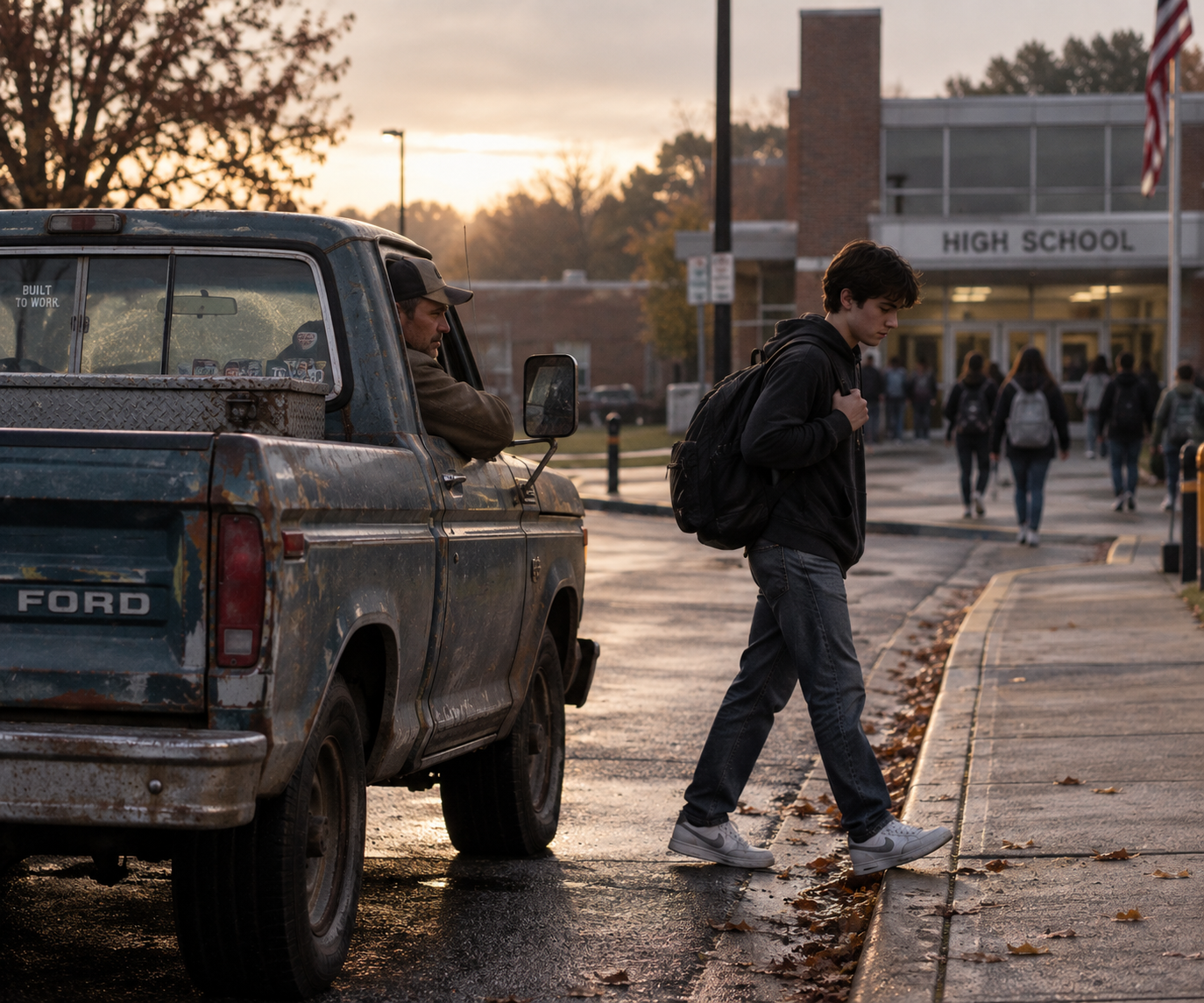
It was an old blue Ford pickup with faded paint, a cracked dashboard, and a passenger door you had to slam twice before it stayed shut.
You could hear it coming from half a block away. My father loved that truck. I was embarrassed by it. Every morning, he drove me to school before heading to work.
He was a contractor. Not the kind with an office and employees. Mostly small jobs. Drywall. Tile. Painting. Whatever someone was willing to pay him to do.
The back of the truck was always filled with tools, buckets, extension cords, and pieces of lumber. And every morning, about a block before school, I'd say the same thing.
"You can drop me here."
At first, Dad didn't question it.
Then one morning he looked toward the school.
"I can take you to the front."
"It's fine."
"It's cold."
"I said it's fine."
He looked at me for a second. Then he pulled over. I grabbed my backpack.
"Have a good day," he said.
"Yeah."
I shut the door and walked toward school. I never told him the truth. I didn't want my friends seeing that truck.
Their parents drove newer cars. BMWs. SUVs. One kid's father had just bought a Mercedes, and everyone talked about it for a week.
My dad's Ford had paint peeling off the hood.
So every morning, I walked that extra block. Dad never mentioned it again.
A few months later, my mother told me he had been taking extra jobs.
I didn't think much of it.
Then, during my senior year, my parents surprised me with a used Honda Civic.
It wasn't new.
But to me, it might as well have been a Ferrari.
I remember walking around it in the driveway, smiling like an idiot.
Dad tossed me the keys.
"Now you don't have to wait for me in the mornings."
I hugged him.
What I didn't know was that he'd paid for most of it with those extra jobs.
Saturdays. Evenings. A few Sundays.
The same truck I was embarrassed to be seen in had carried the tools that paid for the car I couldn't wait to be seen driving.
I didn't understand that at seventeen. I do now. My father kept that Ford for another eleven years.
By then, I had a career, a mortgage, and children of my own.
One afternoon, I stopped by my parents' house and noticed the driveway was empty.
"Where's the truck?"
Dad barely looked up.
"Sold it."
I laughed.
"Finally."
He smiled.
"Finally."
I didn't think about it again for years.
My father is seventy-three now. His hands shake a little. His knees bother him. He doesn't do construction anymore.
A few months ago, we were sitting in my garage while I changed the oil in my son's car.
Dad was watching from an old folding chair.
My son came outside.
"Grandpa, what was Dad like when he was my age?"
Dad laughed.
"Embarrassed by everything."
I knew exactly what he meant.
Later that night, I started thinking about that old Ford. I remembered the cracked dashboard. The smell of sawdust. The coffee cup that never left the center console.
And suddenly, more than anything, I wanted to see that truck again.
I searched online for weeks.
Same year.
Same model.
Same faded blue.
I even found one that looked almost identical.
I considered buying it.
But I didn't.
Because I realized I wasn't looking for the truck.
I was looking for those mornings.
I wanted to sit in that passenger seat again.
I wanted to hear the tools rattling in the back.
I wanted my father to pull up to the front of the school.
And this time, I wouldn't ask him to stop around the corner.
I'd let everyone see me.
I'd probably even leave the window down.
When you're young, you notice what your parents don't have.
When you get older, you start noticing what they gave up so you could have more.
I spent years remembering that old truck as something my father should have replaced.
Now I understand.
"That truck wasn't proof that we had less. It was proof of how hard my father worked to make sure I never felt like I did."

The Call I Sent to Voicemail
The last conversation I ever had with my father ended with me hanging up on him.
I've replayed that moment in my head thousands of times over the last fourteen years, searching for a version where I handled it differently. There isn't one. Reality is stubborn like that.
At the time, I was thirty-two years old and convinced the world revolved around my career. I had just been promoted to regional sales manager, worked twelve-hour days, answered emails during dinner, and believed every missed call was an interruption instead of an opportunity to connect with the people who loved me.
My father never understood any of it. He grew up believing work ended when you walked through your front door. Family came first. Phones stayed in your pocket at the dinner table. Sundays were sacred.
We argued about it constantly. Every time he called during work, I'd answer with the same frustrated tone.
"Dad, I'm busy." He'd always laugh. "I know you're busy. I just wanted to hear your voice."
Back then, I thought he was being needy. Today, I'd give anything to hear his.
One Thursday afternoon, my phone rang while I was sitting in the middle of a meeting with a client I'd spent months trying to land.
Dad.
I declined the call. A minute later he called again. I declined it again. Then he called a third time.
Embarrassed and irritated, I excused myself from the meeting and answered.
"What is so important that you have to call three times?" There was a long silence. "I just wanted to tell you something." I sighed loudly. "Dad, can this wait? I'm working." Another pause. "I suppose it can." "I'll call you tonight." "Okay, son." Before he hung up, he quietly said something I barely noticed. "I love you." Without thinking, I replied, "Yeah... love you too."
Then I ended the call before he could say anything else. I never called him that night. Work ran late. Then I met a colleague for dinner. By the time I got home, it was almost midnight. I figured I'd call him tomorrow. Tomorrow never came.
At 5:17 the next morning, my sister called. Dad had suffered a massive heart attack while watering the plants in his backyard. He was gone before the ambulance arrived. For weeks after the funeral, I couldn't stop wondering what he had wanted to tell me.
Maybe it was something important. Maybe it wasn't. Maybe he just wanted to hear my voice one more time. I'll never know.
About six months later, my mother handed me an envelope she'd found in his desk. Inside was a birthday card.
My birthday wasn't for another three weeks. He had already bought it. Already written it. Already signed it.
The message inside was only one sentence. "No matter how old you get, hearing your voice is still my favorite part of the day."
I broke down in my mother's kitchen. Not because he was gone. But because I finally understood why he kept calling.
He wasn't lonely. He wasn't bored. He simply loved his son. And his son was always too busy.
These days, when my phone rings and I see my mother's name, I answer every single time. If my wife calls, I answer. If my brother calls, I answer.
Meetings can wait. Emails can wait. Almost everything can wait. People can't.
If you're reading this and someone you love has called you today, call them back. Not tomorrow. Not after dinner. Not when work slows down. Right now.
Because the greatest regret of my life isn't that I missed one phone call. It's that I spent years believing I'd always have another chance.
The Ghost In The Drop Ceiling
I do freelance IT and smart-home installations for high-end residential clients.
In March of 2025, I took a job through a referral to audit a massive, newly renovated smart home in Hidden Hills, California.
The client was a tech executive who had spent nearly $200,000 on a top-tier, locally hosted automation system.
He wasn't using any of the standard consumer AI assistants.
He wanted total privacy.
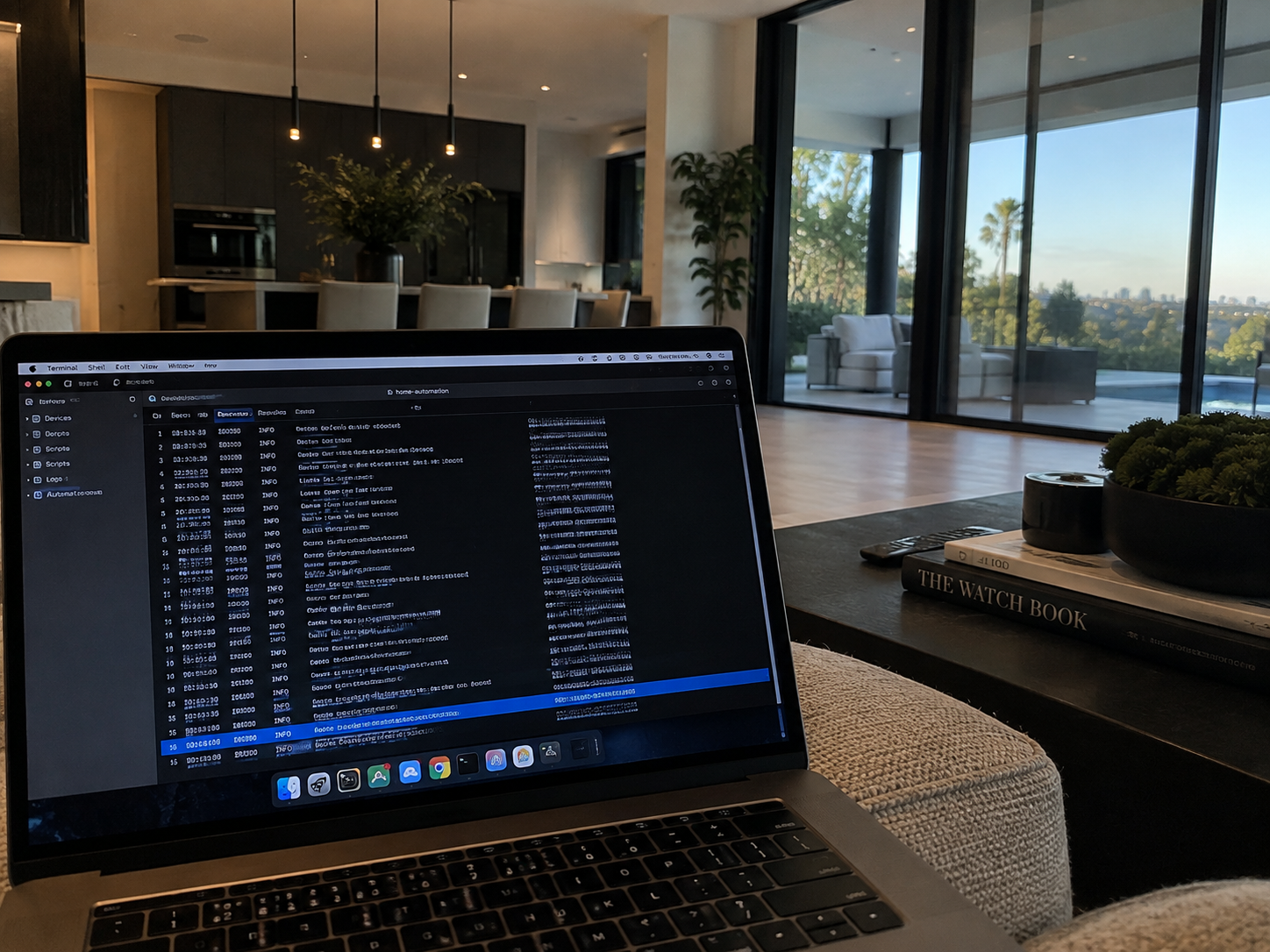
So everything ran off a massive server rack in his basement, controlling the lights, climate, multi-room audio, security cameras, and automated window shades through custom scripts and localized voice-recognition modules.
The issue he called me about sounded mundane.
A glitching "Welcome Home" routine.
Whenever he or his wife came back from work, the house was supposed to automatically disarm the alarm, set the thermostat to 72 degrees, and play a specific acoustic playlist through the ceiling speakers.
For the last three weeks, the routine had been triggering randomly when the house was completely empty.
I arrived on a Tuesday morning while the owners were at work.
The house was a gorgeous, cavernous modern build.
The silence inside was almost deafening, broken only by the faint, rhythmic click-click-click of motorized blinds adjusting themselves to the sunlight.
I set up my laptop at the kitchen island, plugged into the main network switch, and pulled up the system logs to trace the trigger history for the "Welcome Home" routine.
Right away, something looked off.
A smart home triggers an automation based on specific data inputs.
For a "Welcome Home" routine, it usually looks for a geofence breach from the owner's phone, a garage door sensor opening, or a keycode entered at the front door.
But according to the logs, none of those things were happening.
The routine was being triggered by an internal system override.
Essentially, the system's central hub was being told that someone was in the house by an internal device.
Not an outside arrival.
I started digging into the hardware logs to see which specific device was sending the ghost trigger.
I traced it back to a localized microphone array in the master bedroom.
The system used tiny, flush-mounted ceiling microphones to listen for localized voice commands like "turn off lights" or "close shades."
Because the owner was a privacy fanatic, these microphones didn't stream data to the cloud. They processed everything locally on the basement server using basic acoustic pattern matching.
According to the log file from 2:14 AM the previous night, the bedroom microphone had registered an acoustic match for the phrase:
"I'm home."
I shook my head.
The owners had told me they were fast asleep at 2:00 AM.
I figured it was a classic false positive.
Maybe the TV had been left on.
Maybe a passing truck outside made a rumbling sound that the primitive local audio processor mistook for a human voice.
To prove it, I opened the local storage directory where the server cached the raw audio snippets of voice commands.
Because the system was local, it kept the last 24 hours of audio triggers for debugging purposes.
I found the file from 2:14 AM.
I hit play.
At first, there was mostly white noise.
Just the low hum of the home's HVAC system.
Then I heard something.
The distinct, heavy rustle of bedsheets moving.
A moment later, a voice spoke.
It wasn't a glitch.
It wasn't a passing truck.
It was a human voice.
A low, raspy male voice.
And it sounded like it was right beneath the ceiling microphone.
It said:
"I'm home."
Immediately afterward, the audio track cut out as the system executed the routine.
The kitchen lights down the hall turned on.
The acoustic playlist started playing.
At 2:14 in the morning.
While the homeowners slept.
A cold chill hit the back of my neck.
I looked around the empty, sunlit kitchen.
The house suddenly felt incredibly massive.
And incredibly hostile.
I told myself to think logically.
Maybe someone had hacked the system externally and played an audio file through the network to mess with them.
I went back to the network security logs.
External IP addresses.
SSH attempts.
Unauthorized MAC addresses on the Wi-Fi.
Nothing.
The network was completely locked down.
The command had come entirely from inside the house.
I decided to pull up the security-camera footage from that exact timestamp.
The house had interior cameras in the hallways, though the bedrooms were kept private.
I brought up the feed for the hallway directly outside the master bedroom.
2:10 AM.
I let it play.
At 2:14, the kitchen lights at the far end of the hallway suddenly flared to life.
Exactly when the routine triggered.
I kept watching.
Nobody walked out of the bedroom.
Nobody walked into it.
The hallway remained completely empty.
I sat there staring at the screen, my heart hammering against my ribs.
If nobody left the bedroom...
And the network wasn't hacked...
How did a voice speak directly into a ceiling microphone?
I decided I needed to physically inspect it.
I walked up the floating glass staircase, my boots echoing loudly against the hardwood.
The master bedroom was immaculate.
Massive king bed.
A wall of glass overlooking the hills.
Directly above the left side of the bed, flush with the drywall, was the little circular mesh grille of the microphone.
I brought over a stepstool from the closet.
Climbed up.
Then used a small flathead screwdriver to gently pry the plastic fascia away from the ceiling.
I expected to find a loose wire.
Maybe a short circuit on the board.
Instead, when the housing popped loose, a small flurry of gray drywall dust fell into my face.
Then something else fell.
I looked at it.
And dropped my screwdriver.
Tucked inside the ceiling cavity, directly behind the microphone housing, was a crumpled, empty plastic water bottle.
Beside it was a protein-bar wrapper.
I just stared at them.
Then I looked into the dark gap behind the ceiling.
The modern architecture of the house used a dropped-ceiling design to hide the massive HVAC ducts and architectural lighting cables.
There was a crawlspace up there.
Roughly three feet of clearance.
And it ran across the entire upper floor so technicians could service the embedded utilities.
That's when everything made sense.
Someone hadn't hacked the smart home.
The software hadn't glitched.
"Someone had been living inside the house."
Inside the architectural crawlspace.
Directly above the master bedroom.
They had found the opening around the microphone.
They had removed some of the insulation.
And at 2:14 that morning, while the husband and wife were sleeping underneath them, someone had apparently positioned themselves near that microphone and whispered:
"I'm home."
I didn't finish the audit.
I climbed down from the stool.
Packed my laptop into my bag.
Walked downstairs.
Walked straight outside.
And didn't stop until I was sitting inside my truck with the doors locked.
Then I called the client.
I told him exactly what I'd found.
And I told him to call the police immediately.
Two days later, the client sent me a brief text thanking me for my time and saying that the matter was being handled by local authorities.
They asked me to sign a nondisclosure agreement regarding the specifics of the home's layout.
I did.
They paid my invoice in full, with a massive bonus attached.
I still do smart-home installations.
But to this day, whenever a client asks me to install embedded ceiling microphones or drop-ceiling architectural lighting, I politely refuse the job.
Because every time I look at one of those little circular microphone grilles in a ceiling, I think about that audio file.
The HVAC humming.
The bedsheets moving.
And a man's voice coming from somewhere it should never have been.
"I'm home."
Stories organized by what haunts us
Each category holds a different kind of truth. Browse by the weight that sits heaviest on your heart, or discover stories that mirror your own silence.
Regret
The choices we replay in the dark hours, wondering if we could have chosen differently.
Loss
The people and moments we've lost, and the grief we carry without speaking its name.
Secrets
The truths we've kept locked away, too dangerous or too fragile to share with anyone.
Longing
The desires and dreams we've abandoned, and the lives we imagine in quiet moments.
Your story stays yours, always
Share safely without names, tracking, or judgment. Every confession is encrypted and held in absolute confidence. What you tell us remains between you and the silence.
No names attached to stories
No data collection or tracking
No judgment, only understanding

Stay in the loop
New stories arrive quietly in your inbox each week, unannounced and honest.
FAQ
Questions about how I Never Told Anyone works and what happens to your story.
Yes. We collect no identifying information, no IP addresses, and no metadata. Your story exists without a name attached. Once submitted, it becomes part of the archive, separate from any trace of who wrote it.
Stories are permanent once published. This is intentional—your truth becomes part of the collective archive. If you have concerns about a specific submission, contact us directly and we'll review your request.
We select stories that resonate deeply, that capture something true about the human experience. There's no algorithm, no ranking system. Some stories are featured, others remain in the quiet archive, equally valuable.
We publish stories about regret, loss, secrets, and longing—the full spectrum of what haunts us. We do moderate for safety, but we don't judge the darkness. If your story is honest, it belongs here.
People like you. People carrying their own weight. People searching for proof that they're not alone in what they've never said aloud. This is a space for witnesses and the witnessed.
Your story matters here
Whether you've been carrying this for years or it just surfaced, there's a place for it. Share what you've never told anyone.